
Celebrating Nick Carter’s P.Eng. Achievement
Prism is proud to congratulate Nick Carter on earning his Professional Engineer (P.Eng.) designation.
Achieving a P.Eng. is a significant milestone that reflects years of professional development, hands-on experience, and growing responsibility. For Nick, it represents the culmination of consistent effort and a commitment to continuous learning.
“Achieving my P.Eng. took consistent effort over several years, gaining hands-on experience across a range of projects and developing both technical expertise and professional judgement,” says Nick.
Throughout that journey, Nick was supported by the mentorship, challenging project opportunities, and collaborative environment that are an important part of life at Prism. He is especially grateful for the guidance and encouragement he received along the way.
“Prism supported me through strong mentorship, exposure to challenging work, and a culture that encourages continuous learning and professional growth. I’d especially like to thank Chris, Casey, and Adam for their ongoing guidance and support throughout this journey.”
Earning a P.Eng. is both a professional achievement and a new level of responsibility. As Nick looks ahead, he is excited to continue growing in his role, contributing to project success, and taking on new challenges.
“This milestone marks an important step in my career, bringing both a meaningful achievement and greater professional responsibility. I look forward to taking on new challenges, contributing more meaningfully to projects, and continuing to develop as a professional engineer.”
Congratulations, Nick, on this well-deserved accomplishment. We look forward to seeing your continued growth and contributions in the years ahead.
Prism is here to support your organization’s success.
Connect with Nick
Send him a message
Interested to learn more?
Connect with the Electrical Team
Read more about our services
EV Charging
Lighting Design
ELECTRA Program: Advancing Electric Container Trucking at the Port of Vancouver
Prism Engineering is supporting the ELECTRA battery‑electric container truck pilot program at the Port of Vancouver, an initiative aimed at reducing emissions from port‑related freight transportation and advancing practical electrification solutions.
The ELECTRA program brings together public agencies, fleet operators, and technical partners to pilot battery‑electric container trucks in active port operations. The project focuses not only on vehicle deployment, but also on the charging infrastructure and operational planning required to support reliable, real‑world use.
As part of the project team, Prism is contributing engineering expertise to the design and delivery of charging infrastructure, helping ensure systems are safe, scalable, and aligned with both current operational needs and future electrification goals. Prism is working alongside 7Gen and other partners to support implementation and gather insights that can inform broader adoption across port environments.
Pilot programs like ELECTRA play an important role in testing emerging technologies, reducing uncertainty, and building the technical foundation needed for long‑term decarbonization of goods movement.
For details, visit the Port of Vancouver’s webpage.
If your organization is interested in exploring how battery storage could work for your facilities, our team is ready to help.
Contact UsPrism is here to support your organization’s success.
Read more about our services
Decarbonization Planning
Low Carbon Electrification
BOMA Enspire Retrofit Ready: A Practical First Step Toward Better Building Performance
Know you need to improve your building performance, but are not sure where to start? Planning a major retrofit can feel like a big step when costs, operational risk, and long‑term outcomes aren’t yet clear. The BOMA Enspire Retrofit Ready Initiative is particularly well‑suited to commercial and institutional buildings that are planning upgrades but want clarity before moving forward.
Running from April 1, 2026, to March 26, 2027, the initiative provides funding for non‑capital professional services that improve current building performance while preparing assets for future deep retrofits. Rather than funding new equipment, the program focuses on work that helps teams better understand their buildings and make informed decisions before committing to construction.
What’s in it for building owners and operators?
Retrofit Ready supports activities that reduce uncertainty and unlock insight, including:
- Recommissioning and building optimization to improve comfort, reliability, and energy performance using existing systems
- Energy monitoring and tracking to better understand how buildings operate day to day
- Business case development to evaluate retrofit options and support internal approvals
- Retrofit coordination to help manage complexity and keep projects moving
Funding typically covers 60–80% of eligible pre‑tax costs, helping offset the upfront effort required to plan effectively.
Why this approach matters
Many buildings still have performance gaps tied to controls, scheduling, or system interactions. Addressing these issues early can deliver immediate operational benefits while clarifying where future capital dollars will have the greatest impact.
By focusing on readiness, the Retrofit Ready Initiative helps owners move forward with clearer data, stronger business cases, and fewer surprises.
Prism is a registered BOMA Enspire service provider, supporting clients across Canada with the studies, analysis, and planning needed to move confidently toward higher‑performing buildings.
Interested in understanding whether Retrofit Ready is a good fit for your building or portfolio?
Connect with Prism’s team to explore how a readiness‑first approach can support your energy and asset planning goals.
Contact Us
Prism is here to support your organization’s success.
Read more about our services
Energy and Carbon Audits
Green Building Certification
HVAC
Recommissioning and Retro-commissioning
Learn more about BOMA Enspire
Download the Updated Program Guide
Lessons from 25+ Decarbonization Projects in BC
Across Western Canada, organizations are increasingly seeking practical pathways to reduce energy consumption, meet greenhouse gas (GHG) emission reduction targets, and renew aging building systems. At Prism Engineering, we’ve supported clients through this transition for years, completing numerous decarbonization projects across commercial, institutional, government, and recreational facilities.
Last October, Robert Greenwald, President of Prism Engineering, shared field‑tested insights at the 2025 Engineers and Geoscientists BC (EGBC) Annual Conference in Vancouver. They were drawn from our review of over 25 major projects, from recreation centres and airports to academic campuses and office towers. The findings reveal clear patterns in what drives success, where challenges typically emerge, and how organizations can confidently move toward low‑carbon operations.
Below are five practical lessons property managers, building owners, and operators can apply immediately.
Lesson 1 – Start with stakeholder engagement and clear visioning
Across nearly every project reviewed, effective early engagement proved to be one of the predictors of success. Operators, capital planners, sustainability staff, finance teams, and tenants each bring unique priorities.
Visioning workshops, which were used successfully at the Abbotsford Recreation Centre (ARC), Langara College, and multiple municipal facilities, build alignment around GHG goals, risk tolerance, capital constraints, and long-term renewal needs.
This upfront engagement produces decision making frameworks that guide all subsequent phases, helping clients avoid misaligned expectations, costly redesigns, and operational resistance later in the process.
Lesson 2 – Use detailed assessments to understand true carbon pathways
Deep Carbon Retrofit (DCR) and Low Carbon Electrification (LCE) studies allow organizations to evaluate holistic system interactions, understand technical constraints, and identify the most effective sequence for measures to be implemented. The sequence of measure implementation should take into account factors such as remaining equipment life, emissions reduction per dollar invested, and energy cost savings. The optimal pathway balances these factors while still allowing the organization to meet goals and targets.
At the ARC, for example, Prism modelled four different decarbonization pathways: from like for like replacement to full heating systems integration. The selected option delivered an estimated 73% emissions reduction by recovering waste heat from the ice plant and natatorium and distributing it through a new low temperature heating network.
Similarly, at the Canadian Rockies International Airport, an audit revealed that heat pump failures were rooted not in equipment quality but in control sequencing and system configuration. Through targeted design changes and buffer tank integration, Prism restored the intended operation and delivered an estimated 80% GHG reduction on-site.
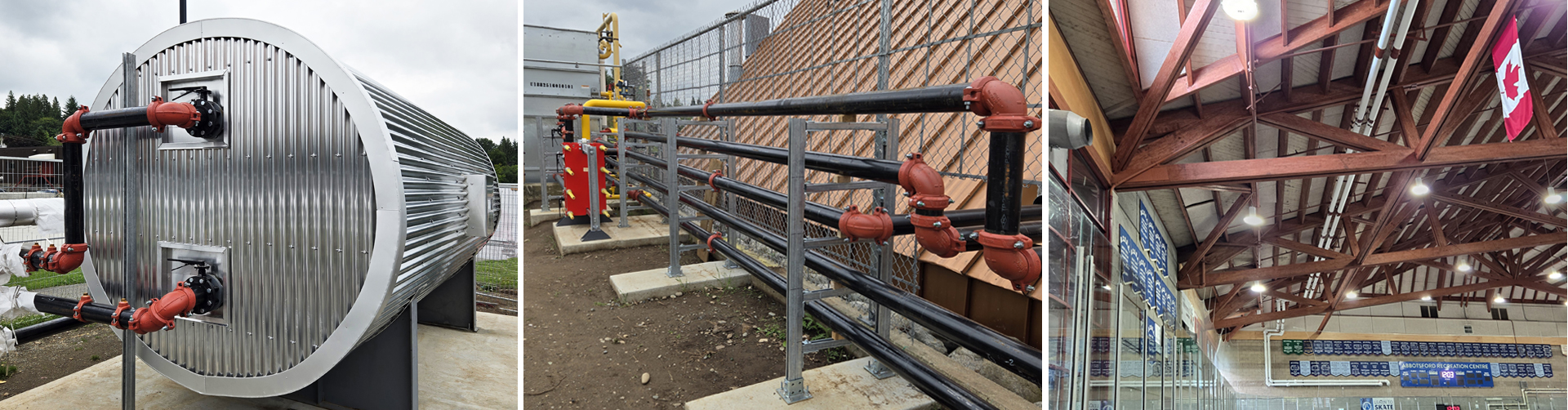
Left to right: Thermal storage tank and the exterior/interior interconnecting piping at the Abbotsford Recreation Centre.
Lesson 3 – Strategic phasing reduces risk and unlocks opportunity
Most existing facilities cannot execute deep decarbonization all at once. Phasing spreads capital, reduces disruption, often aligns with asset renewal cycles, and at times can help improve the business case.
Langara College exemplifies this approach through its multi-year decarbonization roadmap: a deep retrofit of its oldest building, followed by a central heating plant and district energy loop, domestic hot water electrification, and future campus-wide heat recovery integration. This long-term strategy allows the College to sequence investments and maintain service continuity while pursuing a 2030 decarbonization vision.
Quamichan School followed a similar phased roadmap to align upgrades with capital cycles and minimize disruption. Meanwhile, at 2110 W 43rd Avenue, a building that houses small businesses and the Pacific Spirit Community Health Centre, a staged approach enabled incremental electrification and heat recovery while maintaining service and budget discipline.
Lesson 4 – Apply integrated, operator friendly design
Across projects, several themes consistently emerged as critical for long-term performance:
- Keep designs simple, particularly for heat recovery chillers, low temperature hydronic systems, and variable refrigerant flow (VRF) systems, and document clearly and completely to avoid misunderstandings.
- Validate all assumptions through functional testing and commissioning, including actual heating and cooling loads, heat pump sensitivity to supply water temperature, and coil performance.
- Design for constraints, tight mechanical rooms, limited electrical capacity, heritage structures, and required occupancy.
- Prioritize operator usability, clear building automation system graphics, intuitive controls, and accessible components.
The Hillcrest Community Centre retrofit in Vancouver illustrates the value of these principles. Prism resolved long standing heat recovery failures by redesigning piping, installing larger pool heat exchangers, simplifying controls, and integrating heat recovery into domestic hot water production. The result: over $92,000 in annual energy savings and 700 tonnes of CO₂e reduction per year.
Lesson 5 – Commissioning and long-term optimization are non-negotiable
Decarbonization projects interact with existing systems in complex ways. Continuous commissioning and monitoring across seasons are essential to achieving projected performance. Projects such as Hope Recreation Centre, 650 W. Georgia and Kitsilano Community Centre (PDF) reinforced the need for:
- Availability of all parties during commissioning.
- Clear control specifications (not assumptions).
- Sufficient training and documentation for operators.
- Flexibility to respond to unanticipated on-site conditions.
- Commissioning not over one day, but over multiple seasons

Left to right: Piping connecting campus buildings, heat exchange pump, and connecting pipes between buildings during construction at Langara.
What these lessons mean for your organization
Decarbonizing existing buildings can be complex, but it also offers major opportunities: lower operating costs, reduced emissions, renewed systems, and even improved comfort. Prism Engineering’s work across BC shows that success doesn’t depend on a single technology. It comes from the right mix of planning, technical rigour, and engagement of people.
Get the details
Want to dive deeper? Download the slide deck (PDF) presented at the EGBC session to explore project data, visuals, and summaries referenced in this article.
If your organization is exploring how to reduce carbon emissions while renewing aging infrastructure, or you’re just curious to learn more about our approach, our team can help you chart a clear, actionable, and cost-effective path forward.
Let’s TalkPrism is here to support your organization’s success.
Read more about our services
Deep Carbon Retrofits
Recommissioning and Retro-commissioning
See project examples
Our 20+ Years Partnership with Langara College
Vancouver School Board | Recommissioning
Banner image: Engineers and Geoscientists BC Conference and AGM, Photographer Wendy D Photography (image modified by Prism Engineering).
Supporting BC Hydro in Helping Organizations Unlock the Value of Demand Response
As electricity demand continues to rise, driven by population growth, electrification, and extreme weather events, organizations across British Columbia are looking for practical ways to manage their electricity use more effectively.
BC Hydro’s Demand Response program offers a powerful solution by temporarily reducing or shifting energy consumption during peak periods. By participating, organizations can not only support the resiliency and efficiency of the grid but also earn financial incentives while improving their energy savings.
What is demand response and why it matters?
Demand response programs help organizations:
- Lower operational costs through financial rewards.
- Reduce strain on the grid during peak heating or cooling periods.
- Contribute to sustainability and climate action goals.
Practical tools to help sectors get started
To help sectors better understand how to take part in BC Hydro’s Demand Response Behavioural program, Prism collaborated with BC Hydro to develop a series of succinct program participation overviews for several key sectors:
- School buildings
- Post-secondary education facilities
- Commercial office buildings
- Government buildings
- Hospitality buildings
- Municipal buildings
- Public hospitals
- Retail buildings
Designed for busy facility managers, operations teams, and decision-makers, these resources explain what demand response means, why it matters, and how different building types typically respond.
To illustrate demand response in action, each overview also includes a sector-specific case study that describes practical, implemented strategies and the results they achieved in real settings.
How Prism adds value: Turning opportunity into actionable strategies
Understanding how to participate effectively in demand response can be complex. Every building operates differently, and identifying what actions are possible, and what benefits they will bring, requires a technical and strategic approach.
Prism Engineering helps organizations:
- Model their hourly electrical load profile using historic utility data.
- Identify practical demand response strategies tailored to their facilities.
- Quantify potential energy savings, financial incentives, and operational impacts.
- Align demand response program participation with sustainability and electrification goals.
With over 35 years of experience in energy management and a deep familiarity with BC Hydro’s programs and requirements, we help clients make informed decisions that align with their operational needs and sustainability goals.
Get started
The program participation overview documents are available on BC Hydro’s Demand Response Behavioural webpage.
If your organization is interested in exploring how demand response could work for your facilities, our team is ready to help.
Contact UsPrism is here to support your organization’s success.
Read more about our services
Decarbonization Planning
Energy and Carbon Audits
Low Carbon Electrification
Read more about BC Hydro’s demand response program
Demand response for business
Maia Penco Reflects on 15 Years at Prism
We’re excited to celebrate Maia Penco’s 15th anniversary at Prism!
From joining us as a junior drafter to becoming an Associate and Senior Mechanical Designer, Maia’s journey reflects growth, curiosity, and meaningful contributions to our team and clients. We sat down with her to reflect on the path that brought her here, her most memorable projects, the mentors who shaped her career, and the advice she has for the next generation of mechanical designers and engineers. We hope you enjoy this conversation with Maia.
Question: Why Mechanical Design?
Maia: The truth is that it chose me. My original plan was to become an architect, but I started with engineering, thinking it would give me a strong foundation. I didn’t realize it would lead me exactly where I was meant to be. Mechanical design has inspired and challenged me in ways I didn’t expect.
Q: Can you describe your career path at Prism?
M: I began as a junior drafter right after university. Driven by curiosity, dedication, and a willingness to learn, I gradually moved from working on the computer to and project management. With the support of incredible mentors, I’m honored to now be an Associate at Prism, and I strive to pay it forward by supporting others in their careers.
Q: What is the most memorable project you’ve worked on?
M: Every project has a unique story. But one challenged me more than any other—a renovation of a two-storey building that required major HVAC, water, and sanitary upgrades. We even had to lift the entire building to install piles. This one will forever stand out for everyone involved.
Q: What do you enjoy most about working at Prism?
M: Prism has always felt like an extension of my family and aligns with my core values. Successes are celebrated collectively, and I find unwavering support during challenging times.

Q: Any fun facts or memorable experiences?
M: Fun fact: I interviewed my current team leader, Stephen Kooiman, when he applied for a role on our team. I had the pleasure of asking him about his career goals and technical skills. He soon became my mentor and continues to support my growth today.
Q: What career advice would you give to recent graduates?
M: Integrity will set you apart. Show up for your clients, colleagues, and yourself, even when challenges feel overwhelming. Consistency, determination, and reliability build a strong foundation for long-term success. And don’t forget to have fun! Always stay open to laughter and exploring new things along the way.
Maia set to play bowling with the rest of the Mechanical Team as part of our Spring
Team Event series in 2025.
Prism is here to support your organization’s success.
Connect with Maia
Send her a message
Interested to learn more?
Connect with the Mechanical Team
35 Years of Making a Difference | Prism’s Journey Toward a More Sustainable Future
Celebrating Women in Engineering
Read more about our services
HVAC
Mechanical and Electrical Design
Plumbing
See project examples
Major International Coffee Brand | Mechanical, Electrical & Plumbing (MEP) Consulting
Richmond Hospital | HVAC Upgrade
Practical Tools for Better Buildings: Prism Supports NRCan on Building Optimization Resources
As buildings age, their systems often fall out of tune—resulting in unnecessary energy consumption, increased maintenance costs, and diminished comfort. Building optimization through Existing Building Commissioning (EBCx) helps building owners and operators make informed decisions to optimize their systems and improve performance across lighting, HVAC, and other energy-intensive equipment.
Sharing our expertise with NRCan
At Prism, we’ve spent over 35 years helping Canadian organizations identify and implement energy-saving opportunities through building optimization. We’re proud to bring this experience to our collaboration with Natural Resources Canada (NRCan), contributing to a new set of educational factsheets designed to empower building professionals across the country.
“The factsheets will help raise awareness and education among building owners and operators when deciding to optimize existing building systems,” says Sam Thomas, Principal and Strategic Energy Management Team Leader at Prism.
Prism was selected by NRCan to develop five factsheets, each highlighting a key opportunity for improving the performance of existing buildings. These resources can be accessed through NRCan’s EBCx webpages, which feature a wide range of tools to support building optimization efforts across Canada.
They are also available here for direct download:
- Common Commissioning Measures in Existing Buildings (PDF)
- Cooling System Optimization (PDF)
- Engaging Building Operators in the EBCx Process (PDF)
- Heat Pump Technologies (PDF)
- Reducing Energy Waste with Heat Recovery (PDF)
These factsheets provide best practices and guidance for owners and operators navigating building performance improvements, whether they’re working independently or with consultants.
“If they are working with consultants, the factsheets can also offer them guidance on what needs to be done and things to look for in the reports,” Sam adds.

Prism engineers and technical specialists conducting various building and energy audits.
Experience in 1,000+ building audits
The content in these resources draws directly from the on-the-ground experience that Prism’s multidisciplinary team has built up over the years. Our engineers and technical specialists have worked on more than 1,000 building audits—totaling over 73 million square feet.
Prism is also one of the most active service providers in BC Hydro and FortisBC’s Continuous Optimization Program (C-Op). We’ve delivered more than 300 C-Op projects—representing approximately one-third of all C-Op projects approved by BC Hydro.
“The factsheets reflect our experience on what has and hasn’t worked in these projects, as well as trends we’ve seen in the industry and how they might help operators,” Sam explains.
New EBCx pre-screening tool
In addition to the factsheets, Prism has worked with NRCan to create an updated version of the EBCx pre-screening tool, which will be available soon through NRCan’s EBCx webpages. This new user-friendly tool will allow building owners and operators to enter information about a portfolio of buildings and quickly identify which ones are most suitable for existing building commissioning. It’s designed to streamline planning and help users prioritize where optimization efforts will have the greatest impact.
Moving from insight to action
Whether you manage a single building or an entire portfolio, tuning up your systems through existing building commissioning can uncover meaningful opportunities for energy and carbon savings. The new factsheets are designed to make that path clearer—providing trusted guidance to help you act with confidence.
Explore the EBCx factsheets or connect with our team to learn how you can get started.
Prism is here to support your organization’s success.
Interested to learn more?
Connect with our team
Read more about our services
HVAC
Recommissioning and Retro-commissioning
Sustainability Engagement
Read more about Continuous Optimization
Continuous Optimization | Unlocking Low-Cost Energy Savings
Learn more about EBCx
Existing Building Commissioning (EBCx)
Prism Recognized for Environmental Impact at the Greater Vancouver Board of Trade Business Distinction Awards 2025
Prism Engineering is proud to be named one of the finalists in the Environmental Impact category at the GVBOT Business Distinction Awards 2025, an event that celebrated leadership and innovation across the region’s business community.
The awards ceremony, held on October 30, featured a short video highlighting our journey — from our early involvement in BC Hydro’s Power Smart program in the 1990s to our current work supporting organizations in improving energy efficiency, decarbonization, and reducing their environmental impact.
“We’re proud of the role we’ve played over the past 35 years in helping organizations across the region take meaningful action toward a more sustainable, low-carbon future,” says Robert Greenwald, President of Prism Engineering. “It’s rewarding to see our work recognized alongside so many other organizations making a positive impact in British Columbia.”
Congratulations to our fellow finalists in the Environmental Impact category — Novex Delivery Solutions, Renewal Development, and the category winners, SenseNet, for their incredible work on early wildfire detection!
Watch the video featured during the awards ceremony to learn more about our story and how we’re helping Change Systems for a Better World:
Prism is here to support your organization’s success.
Interested in making the most of your energy use and reducing your carbon footprint?
Connect with our Team
Read more about our services
Decarbonization Planning
Energy and Carbon Upgrades
Transportation Decarbonization Planning
Sustainability Engagement
Prism Wins Two ASHRAE Awards for Low-Carbon, High-Performance Building Design Systems
We’re thrilled to share that Prism has won two ASHRAE BC Technology Awards for the year 2024-25, recognizing excellence in sustainable building performance!
The award-winning projects are:
- First Place in Region XI and BC Chapter Award – Warrington 9850 King George Boulevard – Continuous Optimization Implementation (Commercial Buildings EBCx Category)
- BC Chapter Award – Hope Recreation Centre – Heat Recovery System (Existing Institutional Buildings Category)
The ASHRAE BC Technology Awards recognize organizations that are advancing the built environment through proven, innovative design and operational strategies that enhance comfort, air quality, and energy performance. These awards highlight how engineering expertise can help organizations meet climate goals while reducing operational costs.
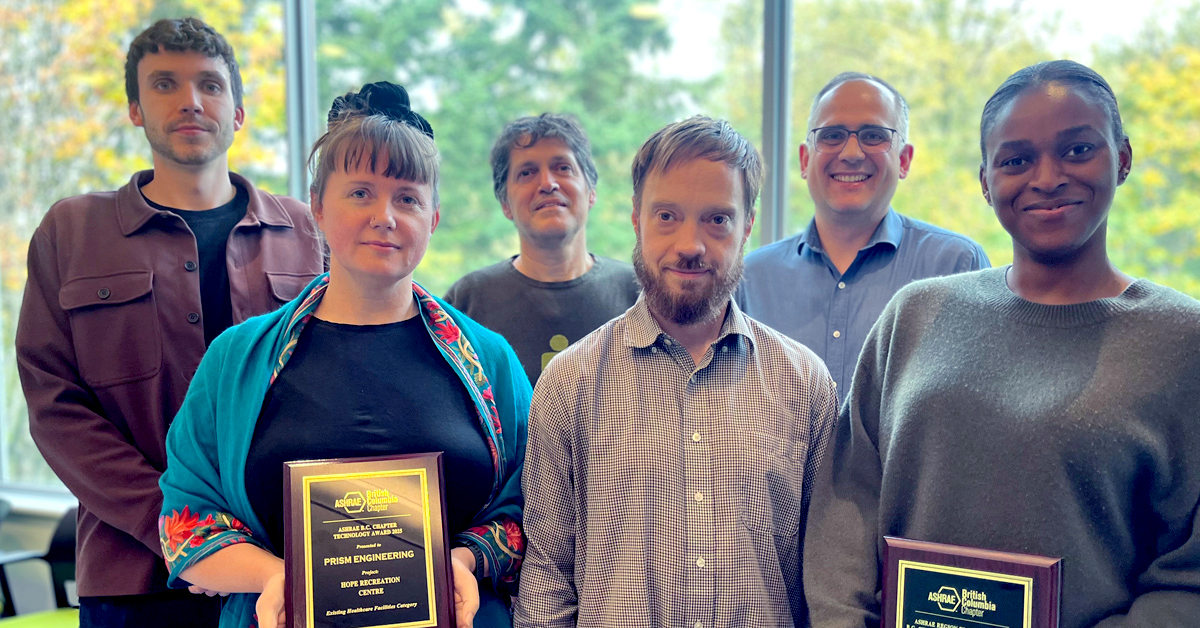
Left to right: Nick Carter, Electrical EIT; Alison Bodine, Intermediate Electrical Designer; Iram Green, Principal and Energy Team Leader; Tim Aske, Associate and Senior Energy Engineer; Stephen Kooiman, Principal and Mechanical Team Leader; and Sewa Odufuwa, Energy Management Professional.
Innovation in building decarbonization and energy efficiency
For Warrington PCI Management, Prism led a Continuous Optimization (C-Op) implementation at 9850 King George Boulevard, a 15-storey LEED Gold–certified office tower in Surrey, BC. Following a BC Hydro Continuous Optimization (C-Op)–funded recommissioning study, Prism implemented advanced control upgrades and ventilation system improvements to restore reliable heat pump and heat recovery operation, reduce reliance on district energy, and enhance overall energy efficiency.
“This project shows how even high-performing buildings can benefit from ongoing optimization,” says Sewa Odufuwa, Energy Management Controls Specialist at Prism. “Through smart control strategies and collaboration with the client, we were able to significantly improve system performance while reducing operating costs and emissions.”
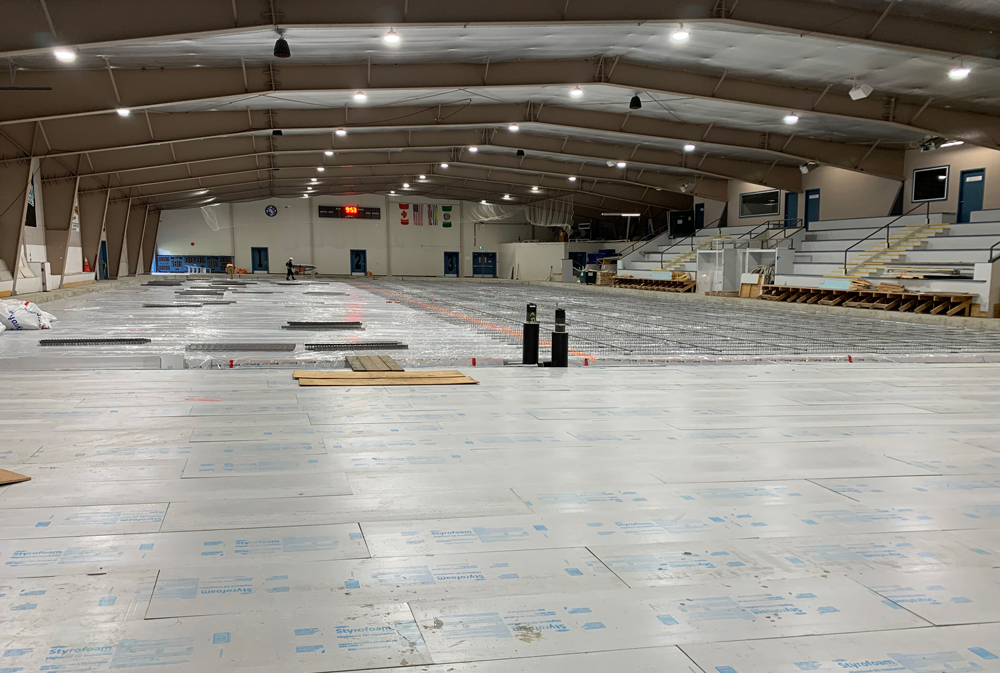
For the Fraser Valley Regional District (FVRD), Prism implemented a new CO2-based heat recovery system to replace aging infrastructure and improve overall energy performance at Hope Recreation Centre. The new system captures waste heat from the ice plant and redistributes it to heat the pools, under-slab area, and other building spaces, significantly reducing natural gas use and operating costs.
This project builds on a previous Low-Carbon Electrification (LCE) study conducted by Prism for FVRD and demonstrates the long-term value of integrated energy planning and design.
“The Hope Recreation Centre project is a great example of how collaboration and long-term planning can transform a community facility,” says Tim Aske, Associate and Senior Energy Engineer at Prism. “By reusing waste heat, we’re not only reducing emissions but also improving comfort and lowering costs for years to come.”
Advancing sustainable building performance
This year’s awards add to previous awards Prism has won over the years and reflect our ongoing commitment to helping clients improve energy efficiency, reduce emissions, and renew assets for a more sustainable future.
Congratulations to the teams involved — and a big thank you to our clients for their collaboration and trust!
Awards highlights
Warrington PCI Management – 9850 King George Boulevard
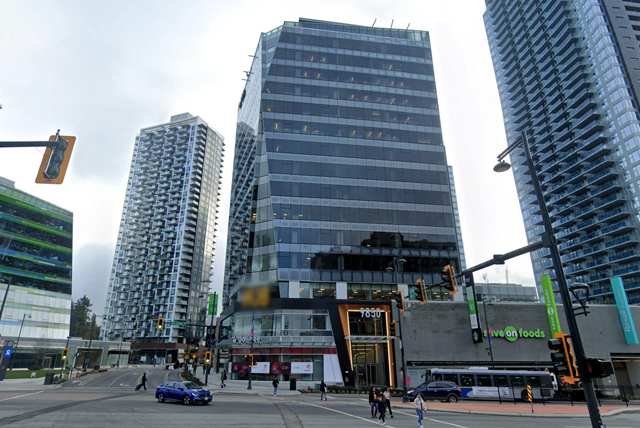
Service: Continuous Optimization (C-Op) Implementation
Building: 15-storey, 137,000 sq. ft. LEED Gold office tower in Surrey, BC
Main goal: Improve system reliability, enhance heat recovery, and optimize controls for consistent, efficient operation.
Estimated results: 84% reduction in annual fuel costs and a decrease of 208 tonnes of CO2e per year.
9850 King George Boulevard, Surrey, BC. Photo: Google Earth.
Fraser Valley Regional District (FVRD) – Hope Recreation Centre
Service: Heat Recovery System
Building: Ice rink, 25-metre leisure pool, hot tub and sauna, fitness spaces, and community rooms.
Main goals: Implement a heat recovery system to reduce GHG emissions and energy consumption across aquatic and ice arena spaces.
Estimated results: $25,200 in annual energy cost savings and a reduction of 88.7 tonnes of CO2e per year.
Hope Recreation Centre ice arena, Hope, BC. Photo: Prism Engineering.
Prism is here to support your organization’s success.
Interested to learn more?
Connect with our Energy Team Leader
Read more about our services
Building Controls
HVAC
Low Carbon Electrification
Recommissioning and Retro-commissioning
See project examples
Justice Institute of BC New Westminster Campus | Controls Upgrade
UNBC | Continuous Optimization Recommissioning
Vancouver School Board | Recommissioning
Prism Welcomes Two New Associates
We’re pleased to welcome Emma Harrison and Shannon Hardman as the newest Associates at Prism!
Their commitment, expertise and passion for energy management make them valuable additions to our Leadership Team.
At Prism, Associates play a vital role in shaping our company’s future—leading business initiatives, mentoring emerging professionals, and nurturing our culture of care and collaboration. Emma and Shannon embody these values, and we’re thrilled to have them help drive our mission forward.

Emma Harrison joined Prism in 2023 as an Energy Management Engineer-in-Training. She brings experience in municipal climate action and has an academic background in mechanical engineering and industrial ecology. At Prism, she has contributed to energy audits, low-carbon electrification projects, and greenhouse gas (GHG) emissions pathway studies across various sectors.

Shannon Hardman joined Prism in 2021. Based in Kamloops, BC, she brings over 15 years of experience in climate change and Strategic Energy Management. As a Certified Energy Manager, she has led energy performance initiatives across more than 140 civic facilities and developed tools to enhance client energy management programs.
We’re excited to see Emma and Shannon continue to support our clients in achieving their energy and sustainability goals.
Meet our Principals and Associates to learn how our Leadership Team can support your organization’s energy journey.