
Continuous Optimization: Limited Time Bonus for Repeat Participants
The Continuous Optimization (C-Op) program, offered by BC Hydro in partnership with FortisBC, continues to be one of the most effective ways for building owners and property managers to improve building performance, cut operating costs, and reduce emissions.
Last fall, we shared that the program had shifted its focus to recommissioning and retro-commissioning projects only, and that participants no longer needed a key account manager to qualify. Now, there’s another important update: a limited-time bonus is available for repeat participants.
Take advantage of this limited-time offer.
-
-
-
- Applications must be submitted by March 30, 2026.
- Projects must be completed by March 12, 2027.
- Projects processed on a first come, first served basis.
-
-
What’s new for repeat participants?
If your organization completed a C-Op project four or more years ago, you may now be eligible for additional funding. This new offer recognizes that continuous optimization is not a one-time event—it’s an ongoing process that delivers deeper results over time.
Here’s the funding details:
- Standard funding (for investigation): Up to $0.15 per square foot of building area, helping to cover the cost of working with a qualified service provider.
- Bonus funding (for implementation): An additional $0.04 per kilowatt-hour (kWh)/year, based on the verified annual electricity savings from your new C-Op project. The total incentive funding bonus is capped at a maximum of $25,000 per project.
Together, these incentives make it easier than ever to fine-tune your facilities, address performance drift, and capture new opportunities for energy savings, emissions reduction, and improved building operations.
Why participate again?
Buildings don’t stay optimized forever. Changes in occupancy, equipment aging, and evolving operational needs mean that even well-commissioned facilities benefit from periodic and ongoing commissioning.
“Just like a car, your building can’t go decades without a tune-up. Performance naturally shifts over time. This bonus is a great opportunity to re-check your systems and make adjustments that often lead to even greater results than the first time around,” explains Sam Thomas, Principal and Strategic Energy Management (SEM) Team Leader at Prism Engineering.
How Prism can help
As an approved service provider, Prism has helped over 300 facilities across British Columbia unlock the benefits of recommissioning through the Continuous Optimization program.
If your organization completed a C-Op project four or more years ago, Prism can help your organization seize this limited-time opportunity. Talk to us to confirm eligibility and start planning!
Prism is here to support your organization’s success.
Interested to learn more?
Connect with our Energy Team Leader
Read more about our services
Recommissioning and Retro-commissioning
See project examples
Energy and Carbon Management Projects
Learn more about BC Hydro’s and FortisBC’s program
Continuous Optimization
35 Years of Making a Difference | Prism’s Journey Toward a More Sustainable Future
A message from Robert Greenwald, President of Prism Engineering.
This year marks a significant milestone for Prism—we’re celebrating 35 years of engineering, energy management, and sustainability impact!
In the early days, we opened our doors with a simple yet ambitious purpose—to help organizations save energy. Back then, energy management was still a relatively niche field. But we saw a clear opportunity to support clients in operating their buildings more efficiently, cutting waste, and reducing costs.
As we grew, so did our clients’ ambitions.
Climate goals emerged. Emissions targets tightened. New technologies offered deeper insights and more impactful solutions. We’re proud to have worked alongside the industry to meet those moments.
Proven impact across sectors and communities
Over the past 35 years, that steady evolution has defined who we are. From our head office in Burnaby, we’ve expanded across the province, with branch offices in the Kootenays, Okanagan, and Vancouver Island, and staff located in Kamloops and Sea to Sky. What began as a small operation has grown into a trusted consulting firm in engineering, energy management, and sustainability services.
We’ve had the privilege of working with organizations in various sectors—municipalities, school districts, health authorities, commercial property managers, industrial sites, and multi-unit residential developers—helping them lead the way in climate action.
Our team has delivered insights and strategies that could save up to 435 million kWh of electricity and 3 million GJ of natural gas each year—preventing nearly 171,000 tonnes of carbon dioxide from entering the atmosphere annually and generating approximately $54.3 million in energy cost savings for our clients.
But numbers only tell part of the story.
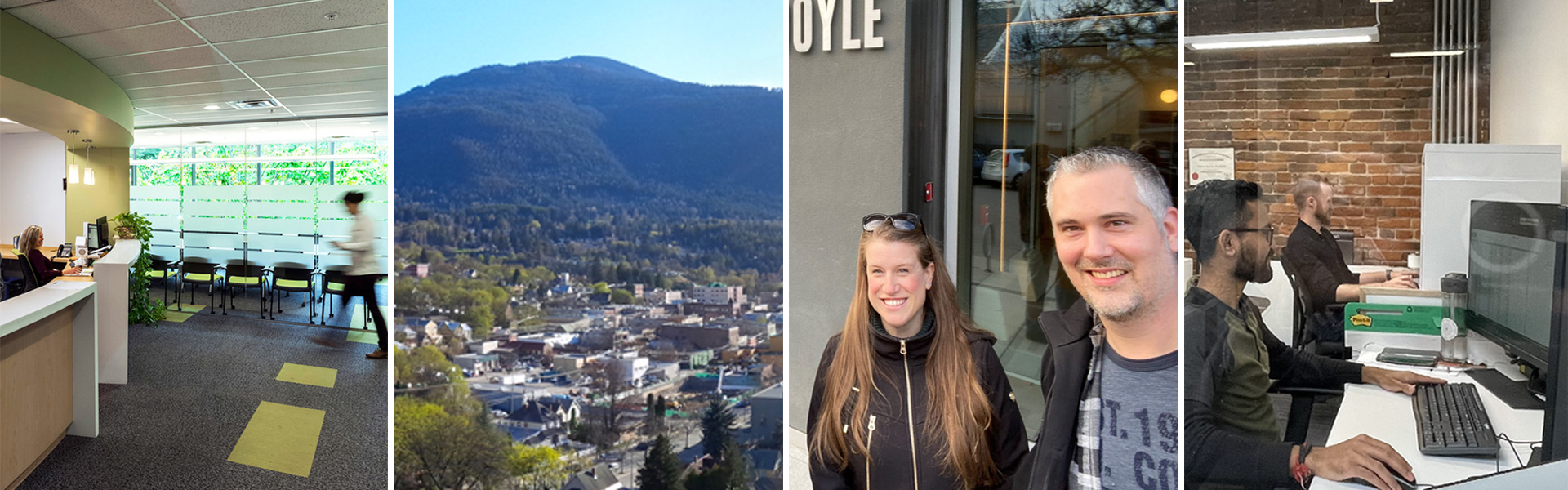
Left to right: Reception area at the Burnaby office; view of the City of Nelson; Nicole Huard, Senior Sustainability and Climate Action Specialist, and Bartjan Kiers, Associate and Senior Mechanical Designer, in front of the Kelowna office; Vaibhav Parmar (front), Electrical EIT, and Adam Franklin, Associate and Senior Electrical Engineer, working in the Victoria office.
The people behind Prism’s success
At the heart of Prism’s success is our people. Our team brings expertise, care, and creativity to our work—whether a team member has been here for two months or three decades. From our consultants and engineers to our project managers and support staff, every person at Prism plays a role in shaping solutions that make a real impact.
Our culture is rooted in care, collaboration, and shared purpose. People join Prism because they want to work on projects that matter, in an environment that values impact, connection, and teamwork.
We’ve built a workplace that supports learning and career development through mentorship, skills training, and leadership opportunities. We’ve invested in initiatives like our Associate Program, which recognizes individuals who take on leadership roles and make exceptional contributions to our collective success.

Prism staff, from left to right: Adam Franklin, Associate and Electrical Engineer, and Chris Fontaine, Associate and Electrical Team Co-Leader; Sam Thomas, Principal and Strategic Energy Management Team Leader; Duane Mattson (retired), Mechanical Engineer, and Alvaro Sandrin, Senior Mechanical Engineer; Emma Harrison, Energy Management EIT.
Trusted by clients for 35 years
Of course, we wouldn’t be here without the trust of our clients.
Whether you’re a new or long-standing client, thank you! Your vision and ambition push us to do our best work. Many of you are on track to achieving bold climate targets, and we’re proud to be your partner in getting there.
Together, we’ve implemented award-winning projects, driven long-term energy savings, and made meaningful progress toward decarbonization.
We’re also proud to have built lasting partnerships with BC Hydro and FortisBC, supporting these local utilities over the years with a wide range of Demand-Side Management programs, including joint Strategic Energy Management (SEM), Continuous Optimization (C-Op), and Energy Wise Network initiatives. These and other client collaborations have amplified our impact and allowed us to bring sustainable solutions to even more of our clients.
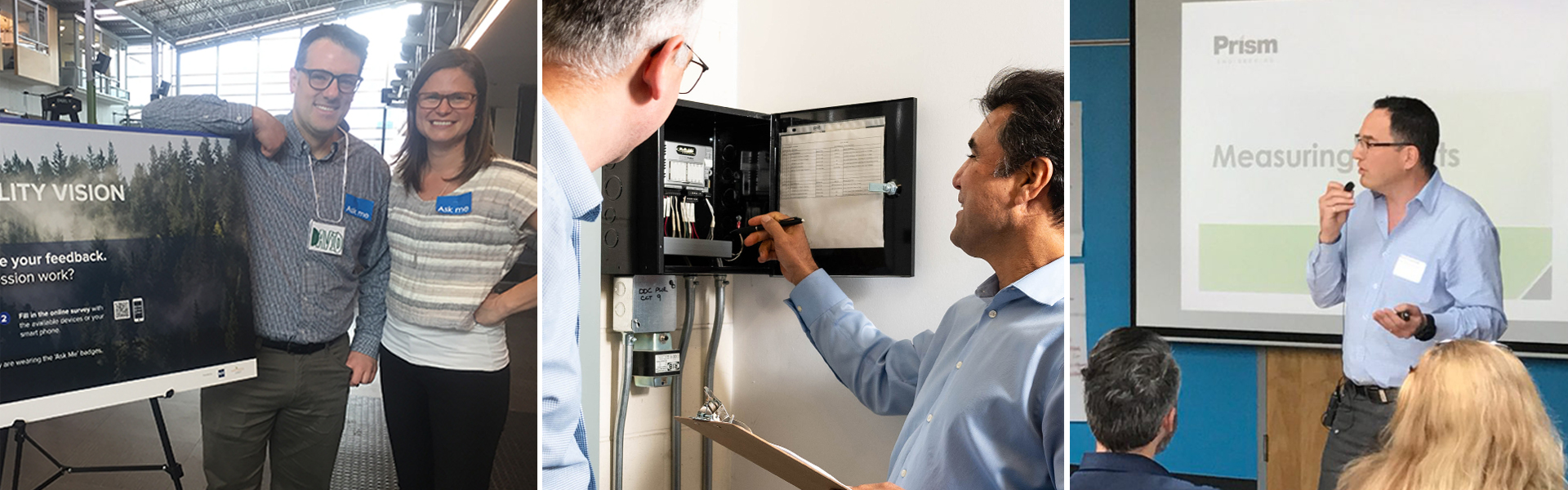
Left to right: David Pereira, former Sustainability Manager at BCIT, and Sarah Smith, Principal and Sustainability Team Leader, during one of six BCIT’s Sustainability Vision Stakeholder Consultation Process sessions, 2019; Stephen Kooiman, Principal and Mechanical Team Leader, and Hamid Samani, Principal and Senior Mechanical Engineer, inspecting an electrical panel; Robert Greenwald, President of Prism Engineering, presenting at an Energy Wise Network session, 2017.
Our commitment to continuous improvement
What’s kept Prism strong over 35 years isn’t just our technical expertise—it’s our ability to adapt. Today, we offer a full range of consulting services—from strategic energy management and recommissioning to electrical planning reports and long-term sustainability strategies.
Our 6-Step Deep Retrofit Approach is designed to help clients reduce energy and carbon emissions in a comprehensive, practical way. It’s built on a simple idea: before investing in new technology, start by maximizing the potential of what already exists—a practical approach to integrating sustainability strategies into building and asset renewal.
Throughout our journey, we’ve also walked the talk. Sustainability isn’t just something we deliver for clients—we practice it in our own operations. From reducing travel emissions and upgrading our offices, to accounting for climate impacts in our everyday decisions, we hold ourselves to the same standard we recommend to others.
Changing Systems for a Better World
And as we reflect on our impact, we’re also looking ahead.
Buildings account for a significant portion of Canada’s greenhouse gas emissions—especially from heating systems. To align with today’s climate science, we must strive for deep reductions in carbon emissions.
Our purpose, Changing Systems for a Better World, is about modernizing infrastructure, optimizing operations, and helping people across organizations understand their role in climate action. This mission reflects both who we are and where we’re going. It’s about seeing the full system—from buildings and technologies to people’s actions—and working together to create change that lasts.
Thank you!
As we mark this 35-year milestone, we’re filled with gratitude—for the trust of our clients, and the dedication of our staff. We’ve accomplished a lot together. And the journey is far from over.
Here’s to the next chapter—full of ideas, action, and impact!
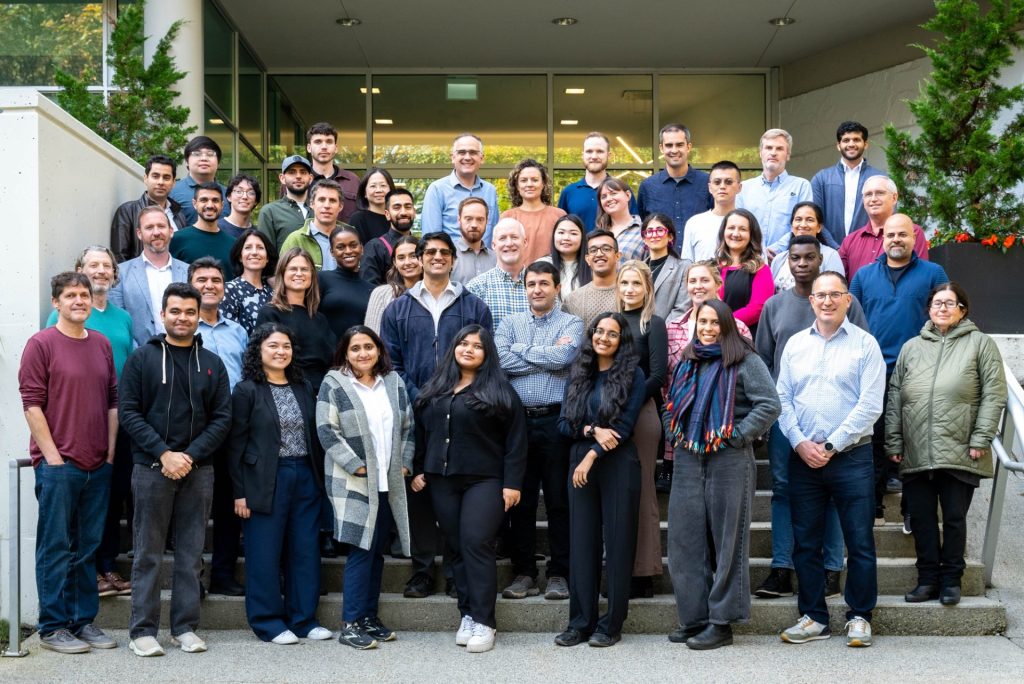
Prism and PUMA staff, 2024.
Unlock Building Energy Performance with up to 80% Funding
Applications are now open for the BOMA Enspire: Building Performance Excellence Initiative, a funding program designed to help commercial building owners and managers improve building energy performance and take meaningful steps toward emissions reduction and deep retrofits.
As a qualified service provider, Prism can help you confirm your eligibility and provide full support throughout the application and project implementation process.
Why participate in the program?
Whether you’re considering recommissioning, planning a heat pump conversion, or exploring carbon savings, BOMA Enspire funds the essential early-stage work that sets your emissions reduction project up for success.
The program is a low-risk, high-impact opportunity that provides up to 80% financial support (funding does not cover construction or equipment) for a range of pre-implementation activities, including:
- Energy and carbon audits.
- HVAC, envelope and GHG assessments.
- Recommissioning and controls optimization.
- Green building certifications (BOMA BEST, LEED®, ENERGY STAR®).
- Feasibility studies (e.g., electrification, heat pumps, steam conversion).
- Lifecycle costing and business case development.
- Project management and tendering support.
- Energy monitoring design and M&V strategy.
New deadline application is December 1, 2025 — funding is limited and reviewed on a first-come, first-served basis.
Contact UsWhat types of buildings are eligible?
All buildings must meet the following criteria:
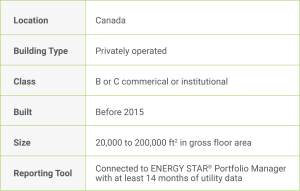
The buildings must also be classified under one of the following Asset Types:

Other Asset Types that are eligible if privately operated:
- Health Care Facilities: Hospitals, clinics, and medical office buildings
- Schools: K-12 and post-secondary educational facilities
- Recreation Facilities: Community centers, athletic facilities, YMCA/YWCA, sports complexes
- Correctional Facilities: Prisons, detention centers, and related buildings
- Libraries: Public or private library buildings
- Fire Stations: Emergency service buildings housing firefighting equipment and personnel
Talk to us to find out if your building is eligible
How Prism can help
Prism Engineering is a qualified service provider for BOMA Enspire. We have expertise to offer support throughout the program.
Here’s how we can help:
- Confirm your building’s eligibility.
- Recommend the right funding stream.
- Scope and price the services.
- Prepare and submit your application (including set up in ENERGY STAR® Portfolio Manager if not currently enrolled).
- Deliver all funded technical work.
- Handle reporting and documentation.
- Access to energy data management with PUMA.
Our experience
Prism brings over 35 years of experience improving the performance of commercial and institutional buildings across Western Canada.
We’ve worked with building owners, operators, and energy managers to uncover cost-saving opportunities, strengthen the performance of HVAC and other energy-intensive systems, and ensure projects are completed on time and on budget.
Our team includes experts in Strategic Energy Management (SEM), Continuous Optimization, and Sustainability. We utilize our PUMA platform to benchmark and manage building performance data effectively.
Are you ready to take the next step?
Let’s talkPrism is here to support your organization’s success.
Interested to learn more?
Connect with our team
Read more about our services
Energy and Carbon Audits
Green Building Certification
HVAC
Recommissioning and Retro-commissioning
Learn more about BOMA Enspire
Download the Updated Program Guide
Driving Change from Within: Empowering Organizations through the Energy Wise Network
For almost ten years, Prism has served as the lead consulting firm for the Energy Wise Network (EWN)—a BC Hydro and FortisBC initiative that helps organizations across British Columbia achieve measurable energy savings through staff engagement and behaviour change.
Since its launch in 2016, the program has supported over 50 organizations and delivered 300+ targeted energy conservation campaigns across sectors including healthcare, education, municipal governments, property management, and retail.
Working closely with BC Hydro and FortisBC, Prism co-designed the program—developing campaign toolkits (Figure 1), delivering hands-on training and networking events, and offering tailored coaching to energy leaders navigating complex change.
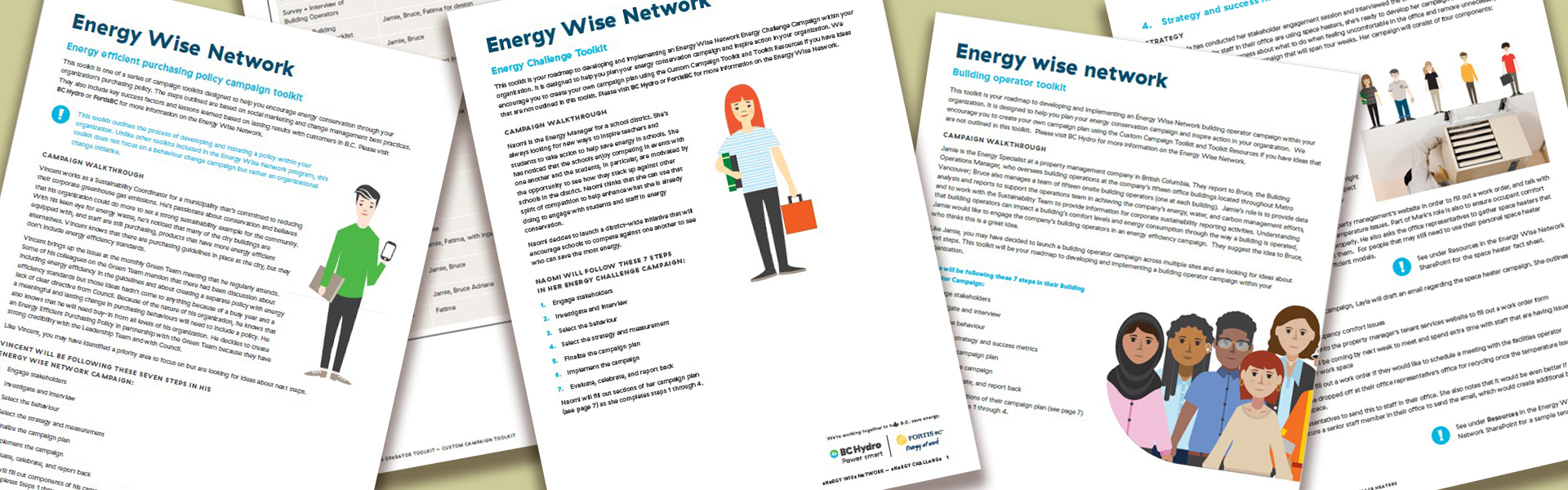
Figure 1: Examples of Energy Wise Network campaign toolkits.
Who can join the Energy Wise Network?
Organizations must meet a minimum energy use threshold—2 gigawatt-hour (GWh) of electricity or 30,000 gigajoules (GJ) of natural gas annually across all sites. The program’s next intake is expected to open in early 2026 (around February or March). If your organization is interested in joining a future cycle, now is a great time to learn more and begin preparing!
Why consider participating?
As the urgency of climate action grows, programs like the EWN help organizations meet sustainability goals while cultivating a culture of shared responsibility.
Participants have access to:
- Two annual Energy Wise Network Summits featuring expert-led sessions on campaign design, behaviour change, green team leadership, and performance tracking.
- Three online training and networking events, creating opportunities to share knowledge and build community.
- One-on-one coaching tailored to organizational needs.
- Campaign resources, including planning templates, outreach materials, and best-practice guides.
Customized coaching and incentive funding options help organizations plan and implement their campaigns.
“Newer participants tend to access support identifying the best campaign to work on and using our 7-Step Campaign Planning Framework, while experienced ones often receive more targeted support on one element of a campaign such as graphic design, communications, metrics methods, and technical tools. Those with established campaigns can access help with engagement strategies like leadership buy-in and green team development,” explains Christine Obee, Senior Sustainability Engagement Specialist at Prism.
The two in-person summits combine training and networking for deeper learning.
“Attendees gain practical skills, hear from expert speakers, and benefit from sharing ideas, challenges, and successes with peers. Participants are often grouped by sector for learning activities, though many topics are explored in mixed groups to support broad learning across the network,” adds Christine.
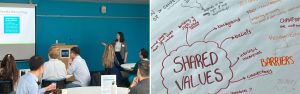
Figure 2: Alexandra Tudose, Senior Sustainability Engagement Specialist, presenting at a summit session (left), and participants’ notes, 2025.
Our methodology
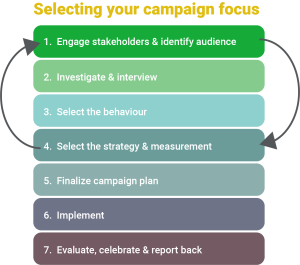
At the core of our approach is Prism’s 7-Step Campaign Planning Framework, developed specifically for the EWN (Figure 3). It guides participants through every stage—from stakeholder engagement and audience research to tailored messaging and impact evaluation.
Grounded in behavioural science and informed by real-world experience, the framework ensures campaigns are practical, measurable, and aligned with organizational context.
“This framework offers a clear, step-by-step approach to campaign design and implementation. It simplifies the complex, people-focused side of this work—especially for those from technical or data-driven backgrounds,” Christine explains.
Figure 3 to the right: The 7-Step Campaign Planning Framework was designed for the EWN program.
Prism: A trusted partner in energy conservation
Our work on the Energy Wise Network builds on an 18-year track record of supporting BC Hydro and FortisBC with demand-side management programs across BC’s commercial and industrial sectors.
“Over the past decade, energy conservation campaigns have shifted from promoting basic behaviour changes, such as turning off lights, to focusing on process, policy or systemic changes that link energy use and GHG emissions” observes Christine.
Our Sustainability Team brings a multidisciplinary approach—with expertise in engagement, facilitation, behaviour change, communications, social marketing, and graphic design. Many team members also have direct experience as energy managers in large public-sector organizations. This blend of strategic insight and practical know-how allows us to deliver real-world coaching that resonates with those leading change from within.
Looking ahead
The Energy Wise Network reflects Prism’s broader mission of Changing Systems for a Better World. That means improving not just buildings and technologies—but also empowering the people who can drive and sustain change from within.
Prism will continue to support BC organizations in embedding energy conservation into their culture, helping energy leaders turn ideas into action and drive lasting impact.
Prism is here to support your organization’s success.
Interested to learn more?
Connect with our team
Read more about our services
Sustainability Engagement
Sustainability Strategy
See project examples
Sustainability Projects
Learn more about Prism’s coaching support
Energy Wise Network Coaching (PDF)
Learn more about BC Hydro and FortisBC’s program
Energy Wise Network
Leadership Transition in Our Sustainability Team
This summer, Sarah Smith, Principal and Sustainability Team Leader at Prism, will be taking some time away to pursue a long-awaited personal project—an extended sailing trip along the coast of Mexico and Central America.
For the past 15 years, Sarah has played a pivotal role in building our Sustainability Services portfolio. Her leadership has helped organizations across diverse sectors make meaningful progress toward their sustainability and climate goals. Her passion, insight, and unwavering commitment have also left a lasting mark on Prism’s direction and culture.
We’re proud to support Sarah on this exciting journey and are deeply grateful for all she has contributed to Prism. While we’ll certainly miss her presence, she will continue to offer guidance in her role as one of Prism’s Principals during her time away. We wish her fair winds on her adventures—and we look forward to welcoming her back upon her return.

Sarah Smith (left) sets sail on a dream journey along the Americas; Julianne Pickrell-Barr steps up to lead Prism’s Sustainability Team.
As Sarah sets sail, we’re thrilled to welcome Julianne Pickrell-Barr into the role of Sustainability Team Leader.
Julianne is an Associate and Climate Action Specialist and brings more than a decade of experience in climate action, energy management, and sustainability. Her work includes helping clients across sectors reduce energy and emissions, build climate resilience, and create clear, actionable climate and sustainability plans.
Prior to joining us in 2021, Julianne served as Energy and Environmental Sustainability Manager for the Abbotsford School District, where she led key initiatives to support long-term environmental and operational performance.
Julianne graduated from Simon Fraser University (SFU) with a Master’s degree in Resource and Environmental Management (REM) with a major in planning. For her research project, she investigated the motivators and barriers to adopting zero-emission vehicles in fleets.
Her collaborative approach, deep technical knowledge, and strong leadership make her well-suited to guide the Sustainability Team.
Looking to the future
As always, our clients and partners can continue to expect the same high-quality, responsive Sustainability services. Our strategy remains focused on delivering meaningful, measurable impact, together, as we carry forward our mission of Changing Systems for a Better World.
We thank Sarah for her extraordinary contributions and wish her all the best on her journey. Please join us in congratulating Julianne on her expanded leadership role.
Prism is here to support your organization’s success.
Connect with Julianne
Send a message
Interested to learn more?
Connect with the Sustainability Team
Read more about our services
Sustainability
See project examples
Sustainability Projects
Celebrating 15 Years at Prism: Sam Thomas’s Journey and Impact in Energy Management
Last summer, Sam Thomas lived out a lifelong dream, embarking on a three-month cycling adventure across Europe with his family. For him, it wasn’t just about covering 2,000 kilometers—it was about spending time with family while his kids are young.
The trip coincided with Sam’s 15th anniversary at Prism Engineering and a well-earned break. Over the years, he has significantly contributed to our company’s successes, culture and direction, as well as to the energy management industry overall.

Sam and his family at the Col du Galibier, in the French Alps. The cycling trip had 14,000m of total vertical gain.
A leader’s path at Prism
During his time at Prism, Sam has played a pivotal role in developing services, building teams, and fostering relationships. Today, Sam is one of our Principals, the Strategic Energy Management (SEM) Team Leader, and the Kootenay Branch Manager of our office in Nelson, BC.
Sam’s journey into energy management began with an early passion for sustainability. “When I was little, I loved watching nature documentaries on TV. I was fascinated by Greenpeace and their work. I used to tell my parents that I wanted to be a ‘Green Pea’ when I grew up. I have always been interested in and passionate about the environment, sustainability, and responsible use of resources,” he recalls.
Born in the United Kingdom, he grew up in New Zealand, where rural life at his family’s vineyard and winery instilled a strong work ethic and a connection to the environment. This enthusiasm led him to study Applied Physics in Energy Systems, with a focus on energy efficiency and renewable energy.

When Sam moved to Canada, Prism was his first employer in the country. Starting at the Burnaby office, he soon envisioned expanding the company’s reach beyond the Lower Mainland. “It has been a little more than 11 years since we opened our office in Nelson, BC,” Sam shares. “My family was looking for a change and I saw a niche that Prism’s services could fill.”
Sam remembers the hard work that went into building a client base in the beginning. “I got a lot of support from Robert Greenwald for that. He helped me develop skills to promote our company to local clients,” he recalls.
The decision to open the Nelson office was welcomed by Prism’s leadership, who recognized the opportunity to better serve the southern interior of British Columbia. Over the past decade, Sam has cultivated a strong local team and established Prism as a trusted partner in the region. “People really appreciate us being local and knowledgeable about the region,” he adds.
Sam (right) with Brian O’Donnell, Founder (left), and Robert Greenwald,
President and CEO of Prism Engineering (center).
Impactful projects
Reflecting on his 15 years at Prism, Sam recalls several stand-out projects. “The chiller expansion that we completed at Interior Health’s Kootenay Boundary Regional Hospital in Trail, BC, in 2014, is one I’m particularly proud of,” he notes. This project involved interconnecting chiller plants to improve redundancy and system efficiency. The retrofit alone was expected to save 194 tons of eCO2 and reduce energy costs by $19,000 annually. “It was very rewarding to complete that project and see our presence in the region making a tangible difference.”
His work as the first Energy Manager for the University of the Fraser Valley (UFV) from 2009 to 2014 helped the institution meet its energy reduction targets two years ahead of schedule. “It was exciting to create change within the organization as they were very receptive to our ideas. The SEM program we established there continues to exist to this day.”

Other significant projects in strategic energy management include collaborations with Thompson Rivers University (TRU) for ISO 50001 and with Strathcona County to develop an Energy Management Plan.
At Prism, Sam has also contributed to various improvements within the company. As a Principal, he plays a key role in helping set Prism’s strategic direction, building and developing our services, and leading people and teams.
Early in his career, he helped develop Prism’s Energy Management Assessment (EMA) tool, named ENGAGE, to support clients in their SEM journeys. “The EMA tool helps clients assess their energy management practices, identify gaps, and create actionable plans to close them,” Sam explains. “We’ve completed more than 100 EMAs using this tool. You know that you’ve facilitated a good EMA if you’ve created the space for a good conversation about SEM between operations and management. The ENGAGE tool really helps us do that.”
Sam working as an energy manager for UFV in 2010.
Looking to the future
Sam is excited about the expansion of our work in strategic energy management, both geographically and in scope. “SEM intersects with almost everything we do at Prism,” he says. “The potential for growth is huge, and we’re currently working on a diverse range of projects with BC Hydro and FortisBC and expanding our reach beyond British Columbia.”
He observes that the energy management industry is evolving as more people recognize the challenges posed by climate change. “Today, organizations are much more interested in reducing their emissions,” he notes. “They’re also more willing to accept longer payback periods, recognizing the importance of prioritizing emission reductions.”

To support this shift, executive and leadership training becomes crucial. “What inspires me in SEM is the opportunity to build capacity with different stakeholders. If we can use our skills to coach and train energy managers to become better at what they do, then we will be better off in the big picture,” he says.
The rise of artificial intelligence (AI) will also play a transformative role in the industry. “At Prism, we’re exploring AI capabilities, from reviewing energy modelling data to helping prepare for energy studies,” he shares.
Last fall, we celebrated Sam’s 15-year anniversary during our annual company “Townhall”. As part of that, we asked him what Prism’s purpose, “Changing Systems for a Better World”, means to him:
“Changing the world starts with changing the systems that shape it. At Prism, we focus on transforming organizational, physical, and internal systems to help manage energy and emissions. While challenges abound, there’s incredible progress being made—and so much more to do. Being part of this mission inspires pride and hope for a brighter future.”
Prism’s SEM Team. From left to right: Mike Latimer, Senior SEM Coach;
Robert Greenwald, CEO & President; Shannon Hardman, Senior SEM Coach;
Sam Thomas, SEM Team Lead; Josh Caplan, Senior SEM Coach;
Richard Senez, Energy Management Professional.
Prism is here to support your organization’s success.
Connect with Sam
Send him a message
Interested to learn more?
Connect with the SEM Team
Read more about our services
Strategic Energy Management (SEM)
See project examples
Strategic Energy Management Projects
Solar Panels and Battery Energy Storage Systems Myth Buster
With advancements in solar photovoltaic (PV) and battery energy storage (BES) technologies, renewable energy systems have become a key tool for reducing carbon emissions and supporting sustainability goals. Used separately or combined, these systems not only contribute to environmental stewardship but also offer significant financial incentives.
Despite their growing adoption, misconceptions about solar panels and battery storage systems persist. To help cut through the noise, our Electrical Team has compiled and debunked seven common myths that may be holding organizations back from exploring the full potential of these technologies.
Let’s gain some clarity and uncover the facts!
Myth 1: Solar panels don’t work in cloudy or cold weather.
Fact: Solar panels can still generate electricity on cloudy days, though at reduced efficiency. They work efficiently in cold weather, as solar panels are more efficient at converting sunlight to electricity when temperatures are cooler.
Myth 2: Solar panels require constant maintenance.
Fact: Solar panels are low-maintenance and can last for 25-40 years. They do, however, need regular inspections and occasional cleaning to remove dirt, dust, or debris. Many systems also come with warranties that cover performance for decades.
Prism offers design and implementation support for solar PV systems for commercial and institutional buildings.

Solar panels are low-maintenance and can last for 25-40 years. Photo: Envato Elements.
Myth 3: Solar panels can damage roofs and cause leaks.
Fact: It’s true that some solar panels need to be attached by drilling into the roof, which can sometimes cause damage or leaks. There are special mounting systems, however, that don’t require drilling. These systems use weights or clamps to hold the panels in place, keeping the roof intact and preventing leaks.
Myth 4: Batteries only store energy for nighttime use and don’t last long.
Fact: While batteries are used to store excess solar energy generated during the day for use at night, they also help with load management during peak demand times or power outages, as seen in Figure 1 below. This offers greater resiliency, as well as cost savings.
Modern lithium-ion batteries have lifespans of 10-15 years or more, and their performance and durability continue to improve with advancing technology. Battery energy storage systems are available in a wide range of sizes, from residential to utility-scale.
Integration of solar and battery storage

Figure 1: Simplified interconnection and energy flow diagram for a Solar PV system with BES integration.
Myth 5: Solar panels and battery systems are too expensive.
Fact: Costs have significantly dropped in recent years, and many governments and utilities offer incentives, rebates, and financing options that make solar and battery systems more affordable than ever. Over time, these systems often pay for themselves through energy savings.
In British Columbia, BC Hydro offers rebates of up to $50,000 for businesses and multi-unit residential buildings (MURBs) for solar and battery systems rated at less than 100 kW. Additional funding is available for larger systems through BC Hydro’s Load Displacement Incentive program.
Myth 6: Solar panels and batteries are difficult to integrate with existing systems.
Fact: Modern solar and battery storage systems, when properly designed, provide seamless integration with existing electrical infrastructure.
Prism provides expert electrical design and implementation support by working with contractors and suppliers to ensure a hassle-free integration process.
Myth 7: Solar panels and batteries can’t support large-scale energy needs.
Fact: Advances in technology have made solar panels and battery energy storage systems scalable for commercial, institutional, and industrial use. Customized solutions can be designed to meet large-scale energy demands, making them a viable option for even the most energy-intensive operations.
Prism is here to support your organization’s success.
Interested to learn more?
Connect with our Electrical Team
Read more about our services
Renewable Energy
Photovoltaics
See project examples
Solar PV projects
How solar and battery work together
Watch the video
Banner Photo credits: Left, Prism Engineering; Right, UniEnergy Technologies, CC BY-SA 4.0, Wikimedia Commons with changes.
Changing Systems for a Better World: Three Standout Projects from 2024
As we step into 2025, we’re reflecting on three standout projects from this past year (2024) that embody our purpose of Changing Systems for a Better World.
At Prism, that change includes improving buildings, implementing technology, and changing culture to support long-term sustainability and decarbonization. These three elements don’t exist in silos. In fact, our most impactful projects often span across all of them.
This past year, our work with District of North Vancouver, Vancouver Community College (VCC), and Vancouver School Board (VSB) showcased how improving infrastructure, leveraging innovative technology, and supporting behavioural shifts work together to drive meaningful change.
“Our purpose, Changing Systems for a Better World, drives everything that we do. It guides our efforts to help clients transition to a low-carbon and resilient future by transforming systems in ways that create lasting impact,” says Robert Greenwald, President of Prism Engineering.
“These projects highlight some of the best of our work and reflect the capacity of our team to ensure buildings are more comfortable, efficient, and sustainable; to leverage technology to solve real challenges and deliver results; and to empower people and organizations to create change,” he adds.
Here’s a brief overview of each project:
District of North Vancouver
Prism’s expertise in electric vehicle (EV) charging infrastructure helped the District of North Vancouver plan and install public charging stations in locations that support EV adoption. While this project was centred around technology, the approach went beyond simply installing chargers—it was about ensuring they were strategically placed to support accessibility, convenience, and adoption. Making EVs a more practical choice for residents requires more than infrastructure alone; it also involves encouraging behavioural shifts that drive broader cultural change.
“Local governments are looking to close gaps in public charging infrastructure, making EV adoption more accessible. This project is a great example of how we help communities reduce emissions and noise while supporting their sustainability goals,” explains Adam Franklin, Associate and Electrical Engineer.

Service: Electric Vehicle Charging Station Design and Implementation
Main goal: Reduce barriers to EV adoption by installing public charging stations at high-traffic, strategic locations in North Vancouver.
Results: Four Level 2 public charging stations at Lynn Valley Village and two 50 kW Level 3 stations at Norgate Park, with new EV charging stations planned over the next years.
Charging stations at Norgate Park (left) and Lynn Valley Village. Photo: Prism Engineering Limited
Vancouver Community College
At Vancouver Community College, our team conducted in-depth climate resilience and decarbonization studies to identify opportunities VCC can implement to reduce emissions while making its buildings more energy efficient and resilient to climate change. This project builds on Prism’s decades-long experience working with advanced education institutions, helping them transition to lower-carbon operations while ensuring campus facilities remain resilient to climate change.
“These projects helped create systems change by building VCC staff capacity through workshops and discussions. These sessions aimed to deepen their knowledge and understanding of climate change mitigation and adaptation for buildings and the ways in which it can be actualized to increase institutional sustainability and climate resilience,” says Julianne Pickrell-Barr, Associate and Climate Action Specialist.

Service: Climate Resilience and Decarbonization Studies
Main goals: Identify opportunities for decarbonization and climate resilience improvements for both the Downtown and Broadway campuses.
Results: Short- and long-term actions to manage energy, reduce carbon emissions, and increase climate resilience to mitigate existing and future climate change risks.
VCC’s Broadway campus was one of the locations that took part in this project. Photo: Wikimedia Commons
Vancouver School Board – Charles Dickens, Sir James Douglas and J.W. Sexsmith Elementary Schools
Our recommissioning work focused on optimizing HVAC systems to improve efficiency and reduce emissions at three VSB elementary schools. Beyond the technical upgrades, this project was about maximizing the value of existing systems—fine-tuning operations, providing facility teams with better insights, and ensuring the schools remain comfortable and healthy spaces for students and staff. The impact was substantial, with an 80% reduction in emissions and recognition with a 2023-24 ASHRAE BC Technology Award.
“By implementing innovative renewable heating and ventilation system control strategies, we solved long-standing challenges,” says Iram Green, Energy Team Leader.

Service: Recommissioning
Main goals: Review the heat pump systems to optimize energy use and reduce emissions at three elementary schools: Charles Dickens, Sir James Douglas and J.W. Sexsmith.
Results: Approximately $27,000 in annual energy savings, 52% to 80% emissions reduction across the schools, and a 2023-24 ASHRAE BC Technology Award.
J.W. Sexsmith Elementary School was built in 2013. Photo: Prism Engineering Limited
Prism is here to support your organization’s success.
Interested to learn more?
Connect with our team
Read more about our services
Climate Change Adaptation
Decarbonization Planning
EV Charging
Recommissioning
Learn more about Prism
About us
Prism launches new purpose statement
Continuous Optimization: Unlocking Low-Cost Energy Savings
In June 2024, BC Hydro and FortisBC announced new rules for their joint Continuous Optimization (C-Op) Program. This update makes it easier for large commercial customers to access funding to increase the efficiency of their buildings’ HVAC and other energy-intensive systems.
The program is now more accessible. It focuses solely on recommissioning and retro-commissioning projects and a key account manager is no longer a requirement to be eligible. The funding remains the same, providing a strong return-on-investment for organizations to consider the program.
About the C-Op Program
The Continuous Optimization Program provides funding for simple, low-cost solutions to improve energy-intensive systems, such as heating, ventilation, and air conditioning (HVAC). It is designed for buildings or facilities of at least 40,000 square feet with a minimum energy consumption of 2 GWh annually. The work must be done by an approved service provider, such as Prism Engineering.
As technology changes and buildings get older, they need ’tune-ups’ to optimize systems and help them run more efficiently. The main goal of the program is to find ways for buildings to perform better using their existing systems.
“A C-Op is the best way to learn about a building’s needs, limitations and energy saving potential,” explains Iram Green, Principal and Energy Team Leader at Prism Engineering.
“It is also an opportunity that can support building owners and managers in getting ready for the next step beyond recommissioning by identifying what it takes to decarbonize the building,” he adds.
Why participate in the program?
One of the main benefits of the Continuous Optimization Program is its strong return-on-investment. Funding often covers 80-100% of the first phase (investigation). The following phase (implementation) typically pays itself back in less than two years, with an average overall cost reduction of 5.7%.
Additional benefits of the C-Op Program include:
- Energy efficiency and overall building performance improvements.
- Carbon emissions reduction.
- Health, safety and occupant comfort improvements.
- Equipment protection and maintenance reduction.
- Training and operator productivity.
How Prism can help
As an approved service provider, Prism can help organizations confirm their eligibility for the C-Op Program. We have the expertise to offer support throughout all of its phases:

Our experience
Over the years, Prism has helped many organizations navigate the C-Op Program, resulting in substantial energy savings and reduced emissions.
Since 2008, Prism has conducted over 250 C-Op projects, representing approximately one-third of all C-Op projects approved by BC Hydro.
Projects of note include recommissioning at three Vancouver School Board elementary schools, the University of Northern British Columbia (UNBC) and Richmond School District No. 38 (SD38).
For the Vancouver School Board (Charles Dickens, Sir James Douglas and J.W. Sexsmith elementary schools), recommissioning resulted in $27,000 in annual energy savings and emissions reductions from 52% to 80% per school. These results earned Prism Engineering first place in the ASHRAE BC Technology Awards for the year 2023-24.
At UNBC, optimization resulted in more than $250,000 in utility cost savings in just one year. At SD38, we helped the organization reduce its electricity use by more than 210,000 kWh/year and natural gas use by 2,300 GJ. Read more about our work with SD38 in the article, “Continuous optimization – low hanging fruit that keeps growing back”, on page 56 of EFMA BC’s Ops Talk magazine, Spring 2024 edition.
“The C-Op Program is attractive to many organizations because it focuses on low-cost solutions that can substantially improve the efficiency of their energy-intensive systems, as well as reduce costs and carbon emissions,” says Iram.
Prism is here to support your organization’s success.
Interested to learn more?
Connect with our team
Read more about our services
Recommissioning and Retro-commissioning
See project examples
Energy and Carbon Management Projects
Learn more about BC Hydro’s and FortisBC’s program
Continuous Optimization
Prism Wins Three ASHRAE Awards for Innovative Building Design Solutions
We are pleased to share that Prism Engineering was honoured with three ASHRAE BC Technology Awards for the 2023-24 year.
Each award-winning project secured first place in its respective category:
- City of Nanaimo / Port Theatre – Low Carbon Electrification – Existing Buildings/Other Institutional Category
- Langara College – Central Heating Plant Integration – Existing Buildings/Educational Facilities Category
- Vancouver School Board (VSB) – Recommissioning – Existing Buildings/Commissioning EBCx Category
The ASHRAE BC Technology Awards are presented annually to recognize organizations and projects that have effectively implemented innovative building design solutions to enhance occupant comfort, indoor air quality, and energy conservation across British Columbia.
“These awards underscore Prism’s commitment to pushing the boundaries of decarbonization and energy efficiency,” says Robert Greenwald, President of Prism Engineering.
“They reflect our team’s technical excellence and dedication to delivering sustainable, impactful solutions for the communities we serve. Being recognized for such innovative projects reinforces our purpose of changing systems for a better world,” he adds.

Left to right: Farzad Gharibi, Mechanical EIT; Stephen Kooiman, Principal and Mechanical Team Leader; Hamid Samani, Principal and Senior Mechanical Engineer; Emma Harrison, Energy EIT; Sewa Odufuwa, Energy Management Professional; Iram Green, Principal and Energy Team Leader; Max Melchior, Energy Management Professional; and Alison Bodine, Intermediate Electrical Designer.
Supporting client’s decarbonization goals
Earning ASHRAE’s recognition is significant for our work, coming from one of the most esteemed associations in our industry. It is a testament to Prism’s expertise in supporting our clients to achieve their goals, from design to implementation.
“The awards highlight our ability to develop innovative, unique solutions tailored to our clients’ needs, drawing on the strengths of a multidisciplinary team. I am very proud of our employees for their work and congratulate them for their dedication and commitment to each project,” says Robert.
For Langara College, the new central heating plant integration is a major step towards fully decarbonizing the campus, directly improving the well-being of students and staff.
“This project continues our longstanding relationship with Langara, spanning over 20 years. It sets the stage for their successful transition to renewable technologies in the future,” explains Stephen Kooiman, Mechanical Team Leader at Prism.
At Port Theatre, there was no simple solution to decarbonization, but Prism’s innovative approach resulted in a 90% reduction in the building’s emissions. Similarly, the award recognizes the positive results obtained at VSB’s three elementary schools – Charles Dickens, Sir James Douglas, and J.W. Sexsmith – where implementing innovative renewable heating and ventilation systems effectively resolved longstanding issues and exceeded the client’s expectations.
“For both projects, I am proud of our team for navigating the complexities involved in integrating hybrid systems to develop unique solutions”, says Iram Green, Energy Team Leader at Prism.
Here’s a brief overview of each award-winning project:
City of Nanaimo – Port Theatre

Service: Low Carbon Electrification
Building: Port Theatre is one of the most popular cultural centres on Vancouver Island. It was built in 1998 and includes a theatre, offices, lobby, and backstage area, totalling 38,875 square feet.
Main goals: Redesign the heating system with air-to-water variable refrigerant flow to provide primary heating. Include heat recovery from the building during shows and additional redundancy if one system fails.
Results: GHG savings of 98 tonnes eCO2, equivalent to 90% of the building’s emissions.
Photo: Prism Engineering Ltd.
Langara College

Service: Central Heating Plant Integration
Building: Langara College is a post-secondary institution consisting of eight major buildings constructed between 1970 and 2016, with a total occupied floor area of 646,329 square feet.
Main goals: Install new central heating system and district heating pipes across campus to optimize heating efficiency, reduce emissions and support the buildings’ transition from natural gas to future low-carbon energy sources.
Results: Improved system efficiency to above 85%, leading to a 17% reduction in GHG emissions and fuel savings of approximately 4,600 GJ.
Photo: Langara Library by Morgana911 via Wikimedia Commons
Vancouver School Board – Charles Dickens, Sir James Douglas and J.W. Sexsmith Elementary Schools
Service: Recommissioning
Building: The schools were built between 2006 and 2013, with a total floor area that ranges from 42,506 to 54,390 square feet. They include classrooms, staff rooms, washrooms, multi-purpose areas, a gym, a library, among others.
Main goals: Review the schools’ heat pump systems to optimize energy use and reduce emissions.
Results: Approximately $27,000 in annual energy savings and 52% to 80% emissions reduction across the schools.
Photo: Prism Engineering Ltd.
Prism is here to support your organization’s success.
Interested to learn more?
Connect with our team
Read more about our services
District Energy Systems (DES)
Low Carbon Electrification
Recommissioning
Learn more about other award-winning projects
City of Vancouver | Kitsilano Community Centre Heat Recovery
Langara College | Building Deep Retrofit
Prism Wins Six ASHRAE Awards for Projects in Energy Savings and Decarbonization
Additional Awards and Projects