
Media Release: Construction sector welcomes B.C. climate plan as good for business
Building companies and organizations: Roadmap to zero carbon by 2050 needed for certainty
VANCOUVER / MUSQUEAM, SQUAMISH & TSLEIL-WAUTUTH TERRITORIES — Fourteen leading companies and organizations working in B.C.’s building sector say the province’s new climate and clean growth plan lays down a solid foundation for the decarbonization of our homes and buildings.
The CleanBC strategy, released last week, outlines an ambitious suite of measures projected to cut carbon pollution from the built environment by 40 per cent by 2030. Notably, through the BC Energy Step Code, the Province is the first in Canada to define a clear path for all new buildings to be net-zero energy ready (ultra energy efficient) by 2032.
The Province is investing in training for our trades workers and professionals, and in new incentives to upgrade our homes and businesses to make them less polluting. The plan also creates an energy rating requirement to ensure that everyone investing in real estate, whether buying a home or leasing an office, has information on building energy performance whilst weighing their options. Transparency will be a key driver of innovation for the sector.
The climate plan, however, leaves some critical questions unanswered, particularly with respect to preparing our existing homes and buildings for the clean future. It’s estimated 70 per cent of buildings standing today will still be in use as of 2050. By 2050, we need to eliminate carbon pollution coming from buildings. Between now and then, we will have only one or two can’t-miss opportunities to retrofit each of these buildings. (How do we ensure these upgrades result in a low to zero carbon building? And how do we ensure new buildings are not only more efficient, but also heated by low carbon sources?)
Today, we’re calling for more clarity in Phase 2 of the climate plan, expected next year, on the roadmap for buildings beyond 2030 and all the way to 2050 — particularly concerning electrification, fuel choices, and the role of utilities in this transformation. To establish a steady retrofit economy, we also need new financing tools and a sustainable source of public funding, such as green bonds, to avoid the boom and bust of incentive programs. We look forward to working with the Province on this next iteration of the plan.
By pursuing these opportunities, we can reduce our carbon pollution while saving money, creating local jobs, and opening export markets for B.C.-made components and designs. We can also ensure all British Columbians live and work in buildings that promote better health, well-being, and productivity.
Quotes
“BCIT’s School of Construction and the Environment supports the needs of industry in advancing the state of practice in sustainable construction through education and trades training. We look forward to working with the Province to advance the CleanBC vision of a zero carbon building sector.”
— Wayne Hand, dean of the School of Construction and the Environment, British Columbia Institute of Technology (BCIT)
“DIALOG is committed to improving the well-being of our communities and the environment we share. As such, it is our goal to work with all stakeholders to reduce the carbon footprint of the built environment, both new and existing.”
— Rod Yeoh, principal, DIALOG
“Provincial programs that pave the way to net-zero energy ready buildings — including important sources of incentives and funding — are key to making the transition to low-carbon communities. We are excited to be a part of the movement towards a clean energy future in British Columbia.”
— Lisa Westerhoff, associate, Integral Group
“With this plan, British Columbia is reclaiming its leadership position in clean energy and climate responsibility. We believe that this will prompt further innovation in the tech and clean energy sectors in this province.”
— Donovan Woollard, CEO, OPEN
“British Columbia’s leadership in building standards not only improves affordability for homeowners, but offers economic opportunity and better, healthier, and more resilient buildings for everyone. We look forward to working with our industry and government partners to ensure the required skills and technologies are available throughout the province.”
— Rob Bernhardt, CEO, Passive House Canada
“In the next 30 years, British Columbians need to work together to eliminate carbon pollution from all of our homes and buildings. This is your friendly neighbourhood megaproject — one that will create jobs in every community and leave a legacy of safer, healthier, and low carbon homes.”
— Tom-Pierre Frappé-Sénéclauze, director of buildings and urban solutions, Pembina Institute
“CleanBC shows important leadership by the Province to commit to meaningful carbon reduction measures that will provoke a true shift in the design and construction industry, resulting in more sustainable buildings that will benefit us all.”
— Susan Gushe, managing director, Perkins+Will
“We are pleased to see the Province listing quantifiable actions towards 2030 emission reductions. In our 30 years of industry experience, we have seen proven results from energy efficiency retrofits that have achieved near net zero carbon. Further support for existing commercial and institutional buildings through EfficiencyBC could help address the gap towards the CleanBC plan targets.”
— Robert Greenwald, president, Prism Engineering
“At RDH, we have a passion for making buildings better, and we know that significant greenhouse gas emission reductions can be realized through the building sector. We therefore fully support the principles of energy efficiency and sustainability introduced in British Columbia’s new climate strategy, and we look forward to working with the industry and the provincial government to achieve this vision.”
— Brittany Coughlin, principal and energy and sustainability specialist, RDH Building Science
“The measures outlined in the CleanBC strategy demonstrate a clear path forward to addressing the serious issue of climate change. This is a big undertaking, but it is doable; we are working on building projects that already meet the 2032 energy performance goals today. It is encouraging to see leadership at the provincial level. Let’s get on with it with the urgency this issue deserves!
— Jason Packer, principal and senior green building strategist, Recollective Consulting
“This is a pivotal opportunity to reimagine the purpose and potential of our built environment — our buildings, infrastructures, systems, and cities — and how we define, procure, design, develop, measure, value, and adaptively evolve them over time. This task demands proactive, regenerative approaches — integrated across sectors and disciplines — to leverage synergies and create stacked values for the holistic benefit of people, place, and planet. The great news is we have enormous capacity in B.C. to do this — the task ahead is to further empower it!”
— Jennifer Cutbill, regional director for B.C.-Yukon and founding chair of the Committee on Regenerative Environments, Royal Architectural Institute of Canada (RAIC)
“We are entering an ‘existing building revolution’ which will transform the way we use energy in all types of buildings. Technology retrofits with ultra efficient lighting, low carbon heating sources, and automated cloud connected controls with data analytics will transform everything. Decarbonizing will be a byproduct of the renewal of virtually every structure in our society with energy efficiency technology, fuelling job growth, savings, and entrepreneurial opportunity.”
— Scott Sinclair, CEO, SES Consulting
“Climate change is the biggest challenge facing the human race today, and we all have a role to play in addressing it. B.C.’s new climate plan sends a clear message that our province is taking a leadership role in tackling climate change. This in turn provides opportunities for sustainable industries to grow and flourish, for citizens to take action, and for all of us to maintain hope that humanity will rise to challenge. It’s not too late!”
— Maeri Machado, director of the sustainability and energy team for B.C. and Yukon, WSP
“With buildings contributing roughly 56 per cent of Vancouver’s overall carbon emissions, it is critical that the province and the local building industry work together to innovate towards meeting higher design, construction, and operating standards. Zero emission buildings are the future of Canadian infrastructure and the key to meeting B.C.’s climate targets. ZEBx commends the province for the launch of the CleanBC Strategy, and commits to supporting the province by continuing to develop programming that accelerates market implementation of zero emission buildings.”
— Christian Cianfrone, executive director, Zero Emissions Building Exchange (ZEBx)

Quick facts
- The Pembina Institute estimates B.C. must reduce carbon pollution from homes and buildings by 80–100% in order to meet the province’s legislated climate target for 2050.
- Accordingly, B.C. needs to retrofit 30,000 houses, 17,000 apartment units, and three million square feet of commercial space each year between now and 2050.
- This megaproject could create 10,000 sustainable jobs across the province and generate $4–8 billion in economic growth.
- Buildings and communities are responsible for 22 per cent of B.C.’s carbon pollution.
-30-
Join the conversation on Twitter: #CleanBC
Contact
Stephen Hui, Pembina Institute
778-987-7654, stephenh@pembina.org
Eva Schacherl, Royal Architectural Institute of Canada (RAIC)
eschacherl@raic.org
Sacha Sauvé, Passive House Canada
778-265-2744, sacha@passivehousecanada.com
Rod Yeoh, Dialog
604-909-1629, RYeoh@dialogdesign.ca
Marissa Clark, Integral Group
510-663-2070 x2017, mclark@integralgroup.com
Melissa Sachs, Perkins+Will
604-727-4920, Melissa.sachs@perkinswill.com
Robert Greenwald, Prism Engineering
604-298-4858, Robert@prismengineering.com
Sunita Bassra, RDH Building Science
604-873-1181, sbassra@rdh.com
Jason Packer, Recollective Consulting
604-669-4940 x203, jason@recollective.ca
Micheal Fountain, WSP
micheal.fountain@wsp.com

An energy-efficient Passive House apartment building under construction in Vancouver. Photo: Stephen Hui, Pembina Institute
Originally published by Pembina Institute
Prism welcomes new staff this fall
Prism’s Mechanical Team has had a busy summer. Not only has the team been managing its typically full plate of renovations and mechanical system upgrades in buildings across BC and Alberta, but they’ve also taken on low carbon electrification upgrades and capital renewal planning projects.
To keep up with this demanding workload, Mechanical Team Lead Stephen Kooiman says the secret is having great people with the right experience and attitude on your team. “We’ve been fortunate to have real depth of experience on our team,” says Stephen. “And we’re equally fortunate to have added some talented new members this summer.”
Pursuing passions in and out of the office
We caught up with two of Prism’s newest mechanical engineers to find out what they’re most excited about in working with Prism and what they enjoy doing when they’re not poring over mechanical drawings at the office.
 In addition to being a CAD specialist and a plumbing and HVAC designer at Prism, Jan Luechachandej is currently learning Spanish and is fluent in Thai. She can also be found settling into a new book, and being a foodie around the city.
Reflecting on what drew her to Prism, Jan says she feels most connected to the value of making buildings greener and more efficient. “I feel that as a designer you can contribute directly to this item,” says Jan, “and improving the efficiency of a building means you also help the occupants increase their performance as well.”
 Recently hailing from Montreal and his hometown of Calgary, Dave Roberts has jumped right in to coordinating new renovation projects at Prism. While he brings a background in commissioning, he is also an amateur astrophotographer (taking photos of space using telescopes), which he admits is, “an annoyingly expensive hobby that requires very clear nights to do… which Vancouver is not exactly known for!”
Dave is eager to expand his design capabilities and was drawn to Prism’s emphasis on working together as a team towards environmental sustainability. He adds, “It’s been a great opportunity meeting and working with everyone on the Prism team, and I’m already thrilled about everything I’ve learned so far. Looking forward to the future!”
We’re delighted to have these two on board and will introduce more new staff in the coming months. We’re always on the lookout for talented people who share our core values. Find our latest postings here.
Top photo: Prism’s Mechanical Team Lead Stephen Kooiman meeting with Alvaro Sandrin on the Energy Team.
BOMA Canada Net Zero Challenge Awards
Last month industry leaders from across Canada gathered to celebrate the inaugural BOMA Canada Net Zero Challenge Awards at BOMEX 2018 in Calgary. Sponsored by Natural Resources Canada and Bullfrog Power, the Net Zero Challenge Awards help acknowledge buildings in Canada that are working towards being net zero energy and/or emissions. Buildings are awarded in three categories: Best in Class, Most Improved, and Innovation. Learn more at BOMA Canada.
Prism Engineering is pleased to work as Technical Advisor to the National award program in partnership with BOMA Canada. It has been a pleasure to work with BOMA Canada to develop the award over the past year and we will continue to support in various areas, including technical scores assessment.

Photos: top left/right – Opening the Awards Ceremony; bottom left – ‘Best in Class’ Award Recipients; bottom right – the BOMA Canada Award team: Hazel Sutton, Victoria Papp, Debbie Prince and Prism’s Ainaz Bozorgzadeh.
Shifting towards Net Zero buildings
This year’s winning buildings all had impressive Portfolio Manager scores over 85. Ainaz Bozorgzadeh, one of the engineers on Prism’s Energy Team who led the analysis and attended the awards ceremony, added, “Learning from buildings that compete for the Net Zero Challenge will help carve a pathway to net zero for existing buildings in Canada. This complements the national targets set by the Pan-Canadian Framework on Clean Growth and Climate Change, for all new construction to be net zero ready by 2030.”
Congratulations to all the winners of the 2018 BOMA Canada Net Zero Challenge Awards:
| Best in Class | 980 Howe, Vancouver, BC (Manulife Real Estate) |
| Most Improved | 4711 Yonge Street, Toronto, ON (Marisa Construction Ltd / Menkes Property Management Services Ltd) |
| Innovation | Le 100 Alexis Nihon, Montreal, QC (Choice Properties REIT) & Earth Rangers Centre For Sustainable Technology, Woodbridge, ON (Earth Rangers Foundation) |
Interested in the 2019 Challenge?
Look for application details and learn more about the challenge at bomacanada.ca/awards/netzerochallenge.

Reflections on a Year as an Energy Management Coach
A year ago, Prism’s Juan Mani was about to start a new role. Juan has been a key member of our Energy Team, involved in all aspects of utility analysis and evaluations of energy savings, for nearly eight years. And last fall, Juan stepped up as an Energy Management Coach with the launch of BC Hydro’s Industrial Cohort Program.


Reviewing energy conservation measures at the Vancouver Dry Docks
In search of operational opportunities
The Industrial Cohort Program is designed for BC Hydro’s medium-sized industrial sector customers to support strategic energy management (SEM) practices at their sites. Through a combination of group workshops, coaching support, and activities like energy treasure hunts, participants focus on leveraging operational opportunities.
Juan is one of three members of Prism’s Energy Team that has taken on a coaching role with the program and has been working one-on-one with Energy Leads at various organizations. Ahead of starting year two of the Cohort Program, we asked Juan recently to reflect back on the past year and share some of his experiences working with this group of budding energy management experts.

What are some of your key takeaways from the first year of the program? Anything unexpected?
JM: Well it’s been really interesting to get a chance to be involved in the whole process of strategic energy management within these organizations. Often we consult on specifics parts of the process like conducting an energy audit or focusing on optimizing control systems, so I don’t often get to see the whole process play out. With the Cohort Program, I’m involved every step of the way and I’ve learned that in order to have success in energy management, it really requires making it a priority and always asking the question, “how does this decision I’m making affect us from an energy management perspective?”
What do you hope participants get out of the program?
JM: I hope they get results! It’s also been great to see participants share learnings and best practices with one another at the workshops. People start interacting with each other and asking questions and getting excited about sharing their knowledge. That’s been really rewarding for me to see and I think that’s been valuable for the participants as well.
What are you excited about for next year?
JM: I’m excited to see how we can measure savings and show results. Right now the participants are in the implementation phase – we’ve already gone through the process of finding opportunities and creating a plan, and by the end of this year, I hope we will be able to show the impact of the program in terms of energy savings.


Touring the Seaspan Dry Docks
Thanks to the folks at Seaspan!
Exploring Energy Management in Shanghai
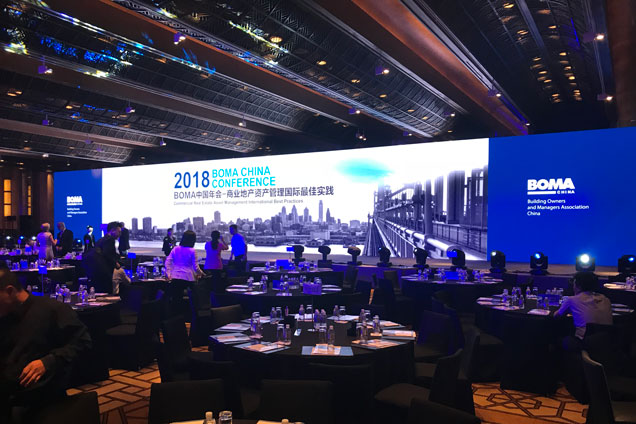
Prism’s Robert Greenwald was honoured to share some of the latest trends in energy management at BOMA China’s Conference in Shanghai this September. The conference brought together over 2200 experts, scholars and business people representing over 700 companies in the commercial real estate industry.
Robert admitted he was a little nervous given it was the largest stage he had presented on, but that, “It was great to learn from others and share best practices from our work in Western Canada, and great to see a number of speakers discussing sustainability, energy management as well.”
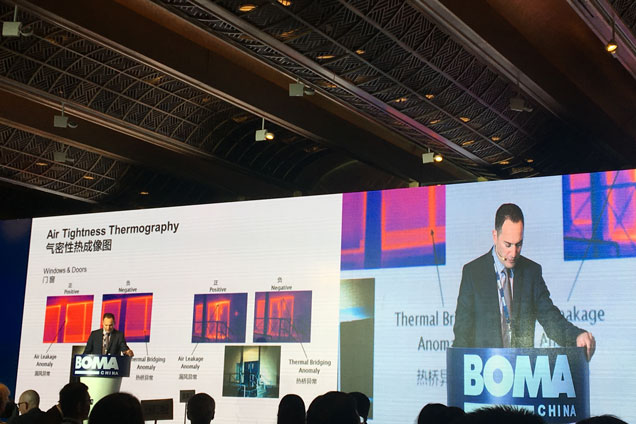
Robert presenting on air tightness thermography
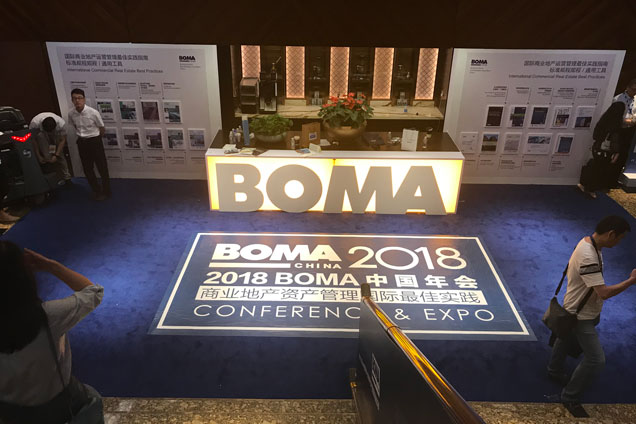
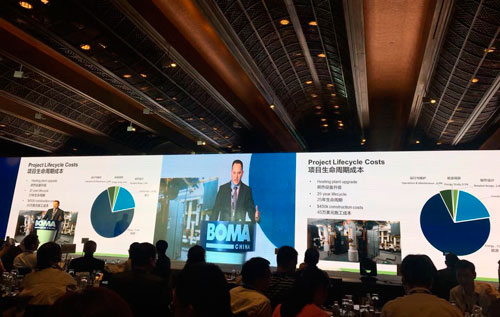

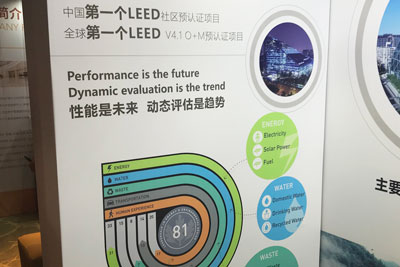
Learning about new sensor technology and LEED green building trends in China
Inspiration from green building design on a massive scale

Image: tangi bertin, CC BY 2.0
Update November 20, 2018
Watch a recap video of the BOMA China Conference

Working Towards a Clean Growth Future
The BC Government is in the process of developing a clean growth strategy, with intention of integrating the province’s goals for climate action, clean energy and sustainable economic growth. This strategy hopes to lay out a framework for a clean growth future, position BC as a leader in the global market for clean energy solutions, and provide a pathway to meet the province’s emission reduction targets.
Its first areas of priority include clean transportation, a clean growth program for industry and clean, energy efficient buildings. This past summer, the Government released three intentions papers outlining each of these priorities and asked the public for feedback.
Individuals and organizations provided input through online discussion forums and written submissions. The results of this engagement will inform the province’s vision and clean growth strategy, set to be released this fall. Areas in development for 2019 include:
- Low Carbon Energy
- Communities and Waste
- Public Sector Leadership
- Clean Transportation Systems
- Adapting to a Changing Climate
- Global Energy Opportunities
Stay tuned.
Read the intentions papers, explore public engagement topics, and sign up for updates.
Image: Source
Climate Change Adaptation Funding is Available for your Municipality

The end of 2017 marks the end of the first year of FCM’s Municipalities for Climate Innovation Program (MCIP), a five-year, $75-million program designed to encourage Canadian municipalities to better prepare for and adapt to the new realities of a changing climate.
Municipalities can now apply for funding through MCIP to support a range of initiatives including climate change adaptation plans, GHG emission reduction and community energy plans, climate adaptation studies, and climate mitigation studies related to energy, water, transportation and other areas. The program offers grants for climate change plans and studies, as well as capital projects.
A rapidly changing climate presents new challenges and potential risks for our built environment. In addition to offering a range of climate adaptation services, Prism can assist you with available funding applications to support climate adaptation initiatives in your municipality.
Contact us to learn more about our climate adaptation services and how we can help support your organization’s climate adaptation planning.
COP23: What You Need to Know
The United Nations Framework Convention on Climate Change: 23rd Conference of the Parties took place this past November in Bonn, Germany and was presided over by the Government of Fiji. With over two weeks of events and negotiations, we’ve put together a quick highlights reel.
Key events included:
- The meeting of the Parties to the Kyoto Protocol (CMP 13)
- The second session of the first meeting of the Parties to the Paris Agreement (CMA 1.2)
Key achievements include:
- 2018 Talanoa Dialogue: A process for countries and organizations to share best practices and stories in order to raise ambition in nationally determined contributions (NDCs), as set out in the Paris Agreement
- Progress in implementing guidelines for the Paris Agreement, which will make it operational
- Launch of the Ocean Pathway Partnership to address the relationship between climate change and the ocean
- Significant dialogue and action regarding climate adaptation, including funding initiatives
- Dialogue and action related to the Sustainable Development Goals
It’s an exciting time for climate action in Canada. We’ve seen a number of initiatives at the federal and provincial level, many of which fall under the Pan-Canadian Framework on Clean Growth and Climate Change that launched at the end of 2016. There is now more funding to support businesses in contributing to these provincial and federal efforts than ever before. Read the Pan-Canadian Framework.
At Prism, we are excited to build on this momentum and to support BC organizations and businesses in their efforts towards GHG emissions reductions. Contact us to learn more about funding opportunities or to discuss enhancing your climate action strategy.
Prism Presents at Launch of New Greener Facilities Conference
In early November, Prism had the privileged of presenting at the inaugural Greener Facilities Conference in Edmonton, Alberta. The conference focused on identifying and implementing energy and greenhouse gas emission reduction projects that lead to greener facilities.
Building control systems are an integral part of many of our facilities, but we often forget the impact that they can have on energy consumption, especially when configured sub-optimally. Sam’s session explored low/no-cost ways to optimize building control systems to minimize energy waste in facilities, while improving occupant comfort and system reliability. Like the audience, you too might be surprised by how many opportunities are right under your nose!
Prism Engineering has had the pleasure of working with clients from a range of sectors on direct digital control (DDC) strategies, including school districts, post-secondary, health care, commercial and office spaces, and municipal facilities.
Give us a call or drop us a line to discuss options for optimizing your building control systems.
Contributing to Canada’s Clean Energy Future
Earlier this month, Prism’s Robert Greenwald joined Kim Rudd, Parliamentary Secretary to the Minister of Natural Resources, and other industry leaders in a discussion about the future of clean energy in Canada. The discussion took place as part of the Government of Canada’s Generation Energy project, an initiative to engage with individual Canadians, stakeholders and experts about how we make, move, and use energy in the future.
The event was hosted at BCIT’s High Performance Lab, a hands-on learning space that offers students the opportunity to become trained in the construction of energy efficient buildings. Rudd met with the group, which included clean energy professionals from a variety of sectors, and led a roundtable discussion on energy efficiency, renewable energy, First Nations energy concerns, and more.
We were honoured to be at the table with BC’s experts in the energy management industry and to be invited to collaborate with industry and government on a vision for Canada’s clean energy future. “It was an extremely worthwhile discussion,” said Greenwald after the event. “It’s really great to see BC’s clean energy trailblazers come to the table with Parliamentary Secretary Rudd. It goes to show that people are paying attention to the opportunity for a more sustainable energy future and that BC is going to be at the forefront of energy innovation in Canada.”
A report on the Generation Energy project, summarizing ideas gathered from individual Canadians, stakeholders and experts from across the country is due out in 2018.