
Client
University of the Fraser Valley (UFV)
Location
Abbotsford and Chilliwack, BC
When extreme weather events like heat domes and atmospheric rivers began hitting British Columbia, the University of the Fraser Valley (UFV) knew it was time to act. In 2024, the institution partnered with Prism Engineering to create a bold Energy Efficiency and Climate Resilience Pathway Plan. The result? A clear roadmap to help the institution meet its 2030 target of a 50% reduction in building greenhouse gas (GHG) emissions and make significant strides towards its 2050 net zero emissions target as well. The pathway plan demonstrates how the University of the Fraser Valley can achieve major energy savings, future-proof its campuses against climate extremes, and realize multiple co-benefits, all while positioning the institution as a leader in sustainability.
The University of the Fraser Valley serves more than 15,000 students across its Abbotsford and Chilliwack campuses. With a strong commitment to sustainability, the university set ambitious goals: Reduce building emissions by 50% by 2030 and achieve net zero by 2050. But achieving these targets required more than good intentions, it demanded a strategic, actionable plan.
Challenge
Increasing climate hazards
The Fraser Valley is experiencing climate events such as heatwaves, flooding, and wildfire smoke that were once rare but are now alarmingly common. The University of the Fraser Valley’s campuses rely heavily on natural gas for heating, and many of its buildings house programs such as chemistry, agriculture or trades with unique and complex requirements. The institution needs a holistic strategy that addresses energy efficiency, decarbonization, and climate resilience goals, while aligning with capital renewal cycles and funding opportunities.
Solution
Comprehensive, data-driven pathway planning
With over 35 years of experience in energy management and sustainability and proven success delivering decarbonization and resilience strategies for higher education institutions, Prism Engineering became the University of the Fraser Valley’s trusted advisor. Using proprietary tools like PUMA for advanced utility analysis and our in-house decarbonization pathway modelling tool, Prism ensured the plan was data-driven and actionable.
Prism delivered a multi-faceted approach that combined technical rigour with stakeholder engagement. This included:
- Integrated Energy Audits to identify energy efficiency measures such as LED retrofits, heat recovery chillers, air-source heat pumps, and solar PV systems and secure funding through BC Hydro programs.
- Climate Resilience Assessments to detect climate hazard vulnerabilities, quantify their associated risk levels and develop prioritized climate resilience measure recommendations.
- Energy & Climate Resilience Pathway Modelling to graphically represent and quantify the cost and emissions impacts of different measure implementation scenarios so university staff could compare, contrast and discuss the benefits and draw backs of different scenarios and select one (Figure 1).
- Stakeholder Workshops to increase internal awareness and capacity, align solutions with the university’s operational priorities, and generate support for the final plan.
- An Implementation Framework and a Set of Metrics the University of the Fraser Valley can leverage during annual budget cycles to facilitate project implementation, track progress, and report out on results.
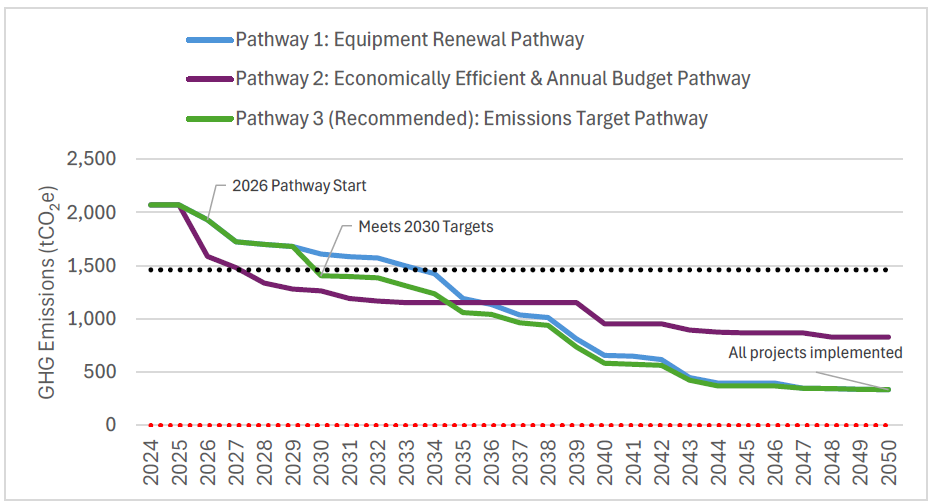
Figure 1: GHG emission profiles of three pathways modelled.
Outcome
A clear roadmap to net zero and resilience
The University of the Fraser Valley now has a clear, actionable roadmap to achieve measurable and inspiring energy efficiency and climate resilience gains, and the confidence and tools needed to navigate an uncertain future. The plan documents the institution’s preferred pathway towards energy and climate resilience improvements. This includes:
- A 50% reduction in GHG emissions by 2030.
- Annual capital cost & emissions projections from 2024 – 2050 to assist with capital planning.
- Annual energy consumption and cost savings projections from 2024 -2050 to assist with operational budgeting and planning.
- A prioritized list of energy and climate resilience measures strategically organized to maximize economic efficiency, increase climate resilience for the most vulnerable systems, and leveraging key decarbonization opportunities to meet emissions reduction targets on schedule.
- Strong internal support for the plan generated through deep consultation with the university staff throughout plan development.
“This plan will help us establish university-wide energy and greenhouse gas emissions reduction targets and identify climate change-related risks to the university’s operations and infrastructure”, explains Doran Hoge, the Director of Energy and Environmental Sustainability at the University of the Fraser Valley. “The plan will also support staff identify and prioritize actions that reduce the impacts of climate change, avoid service disruptions and safeguard the well-being of our university community”, he adds.
Why this matters to your organization
If your organization is facing similar challenges like rising energy costs, climate hazard vulnerabilities, and ambitious sustainability targets, University of the Fraser Valley’s success shows what’s possible. With the right partner, you can turn complex goals into actionable plans that deliver real results.
Ready to future-proof your facilities and achieve similar results?
Let’s TalkBanner image: © 2026 Google